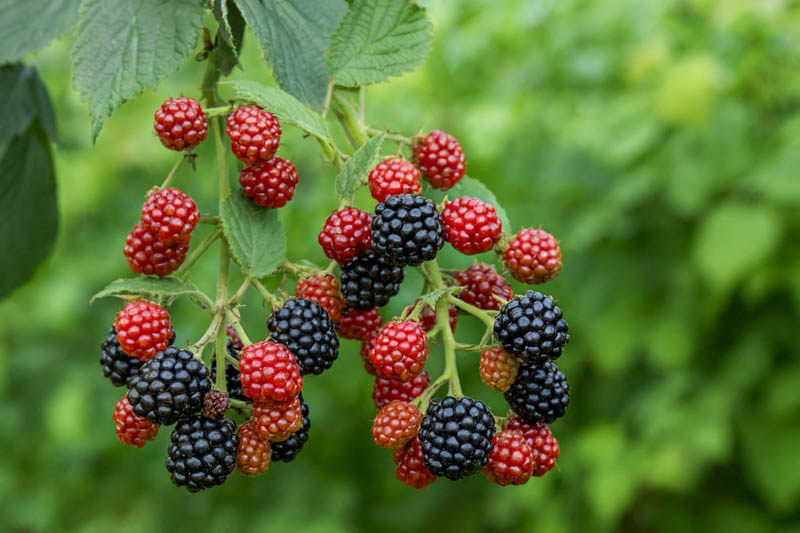
Blackberry
Meet the backyard overachiever: blackberry—a member of the bramble clan in Genus
Rubus. It’s part of the same delicious family as red raspberries and black raspberries (yes, they’re different—see our raspberry hub).
Not a true berry! Blackberries are “aggregate fruits” made of juicy drupelets that cling to a core—unlike raspberries, which slip off and leave a hollow center.
Two-year rhythm. First-year canes (primocanes) grow; second-year canes (floricanes) fruit—then bow out. Primocane-fruiting types even fruit the same year they sprout.
Thornless = kid friendly. Garden darlings like ‘Triple Crown’, ‘Chester Thornless’, and ‘Navaho’ bring flavor without the scratches.
Flavor passport. Regional hybrids shine—marionberry in the PNW and boysenberry in California (blackberry × raspberry romance!).
Sun-kissed = sweeter. Full sun means juicier fruit. Pick when berries are fully black with a soft tug (glossy red-purple = not yet).
Pollinator party. Spring blossoms are bee magnets—boost your harvest by planting bee-friendly allies and butterfly plants nearby.
Low drama, high payoff. A simple two- or three-wire trellis keeps canes tidy and harvests fast.
Kitchen alchemy. From blackberry jam to pie, crumble, cobbler, and compote—you’re always one bowl away from dessert.
Tough but picky about soggy feet. Great in USDA 5–9, but keep soil well-drained to dodge
gray mold and root rot.
Wildlife approved. Birds and small mammals love the fruit. Netting near ripening time = your breakfast wins.
History in your hedgerow. Brambles have fed humans for millennia—today’s thornless cultivars turn that wild sweetness into neat, backyard abundance.
Ready to plant? Dive into our full guide: Blackberry — Uses, Varieties & Care.