Japanese Andromeda, Japanese Pieris, Fetterbush, Lily-of-the-Valley Shrub, Andromeda japonica
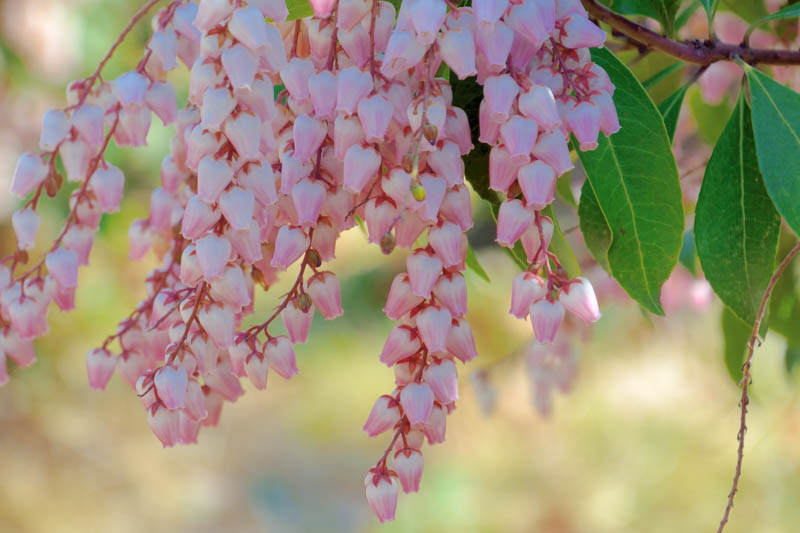


If you have a cool, dappled corner that needs reliable structure and drama, Pieris japonica is a superstar. Commonly known as
Japanese andromeda or lily of the valley shrub, this compact evergreen delivers in every season – glossy foliage,
cascades of bell shaped flowers, and young leaves that flush in fiery shades of red, copper, or bronze. Tuck it into a woodland border with rhododendrons and camellias, or use dwarf varieties in containers, and you get a plant that quietly works hard all year in shade and acid loving gardens.
Summary: Shade tolerant, evergreen shrub with lily of the valley style flowers and colorful new growth. Ideal for woodland gardens, acid loving beds, and shaded foundations.
Use: Structure shrub for shade, evergreen backdrop, container focal point, underplanting for trees, mixed with rhododendrons and camellias.
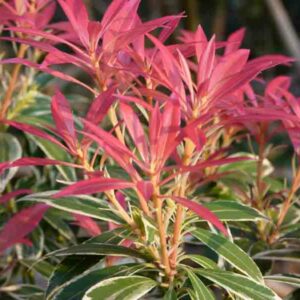
Highlight: New leaves emerge in brilliant shades of red, bronze, or pink above older green foliage, followed by spring showers of lightly fragrant, white or pink bells.
Note: Prefers moist, well drained, slightly acidic soil and partial shade. Protect from harsh afternoon sun and drying winds.
| Botanical Name | Pieris japonica |
|---|---|
| Family | Ericaceae (heath and heather family) |
| Common Names | Japanese andromeda, Japanese pieris, lily of the valley shrub |
| Native Range | Mountain forests of eastern China, Taiwan, and Japan |
| Plant Type and Habit | Broadleaf evergreen shrub, often dense and bushy, sometimes small tree with age |
| Hardiness (USDA) | Generally Zones 5 to 8, with some forms hardy into 4b in sheltered sites |
| Size | Species 6 to 10 ft tall, many cultivars 1 to 6 ft tall depending on selection |
| Sun and Exposure | Partial shade to dappled sun; morning sun with afternoon shade is ideal |
| Soil | Moist, organically rich, well drained, slightly acidic soil; dislikes waterlogged or very alkaline ground |
| Bloom and Foliage | Drooping trusses of white or pink, urn shaped flowers in early spring, with colorful new foliage flushes |
| Primary Uses | Shade shrub, woodland garden anchor, foundation planting, mixed border, container accent |
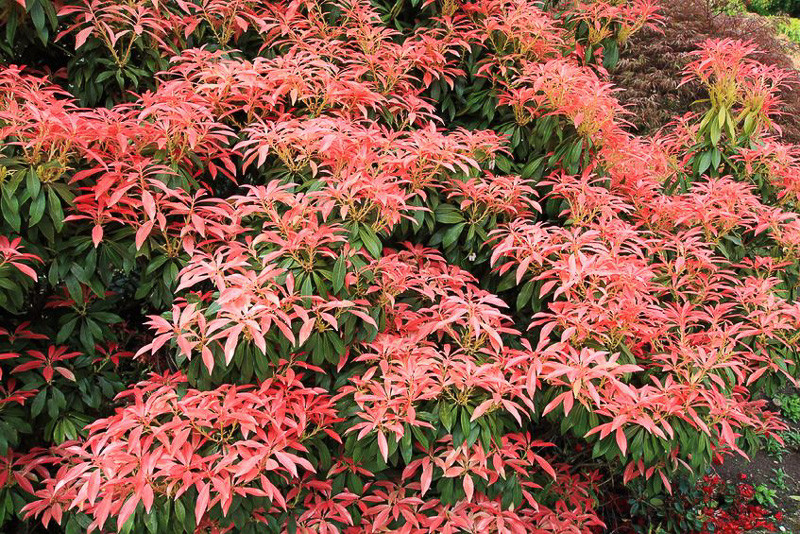
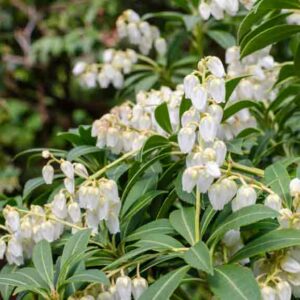
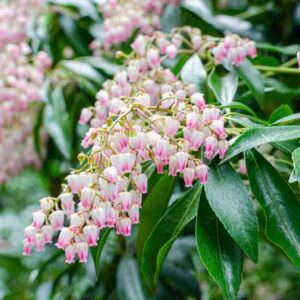
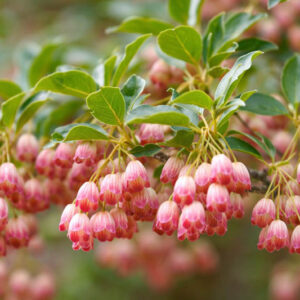
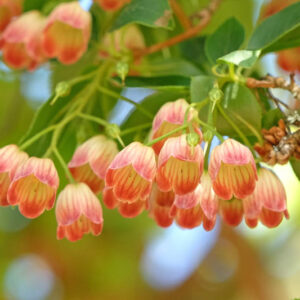
Pieris japonica is a medium sized, broadleaf evergreen from the heath family. In leaf all year, it forms a dense mound or small multi-stemmed shrub with gracefully layered branches. The foliage is leathery and glossy, usually deep green on mature leaves. The real magic happens when new growth appears in vivid shades of red, bronze, or pink, especially on cultivars like Mountain Fire, Katsura, and Red Head. In early spring, before many other shrubs wake up, pieris hangs its branches with long strings of white or pink, bell shaped flowers that look like tiny lily of the valley blooms.
In the wild, Japanese andromeda grows in cool, moist mountain thickets in eastern China, Taiwan, and Japan. It is naturally at home in woodland conditions – filtered light, humus rich soil from fallen leaves, and steady moisture without standing water. That makes it a perfect partner in modern gardens for other shade and acid loving plants like rhododendrons and azaleas.
The species can eventually reach 6 to 10 ft tall (1.8 to 3 m) in ideal conditions, although most garden cultivars are deliberately more compact, from true dwarf pieris like Prelude at around 1 to 2 ft (30-60 cm), to mid sized choices such as Bonfire, Little Heath, and Cavatine. Growth is reasonably slow and steady rather than explosive, which is perfect when you want an evergreen shrub that will not outgrow a small border overnight.
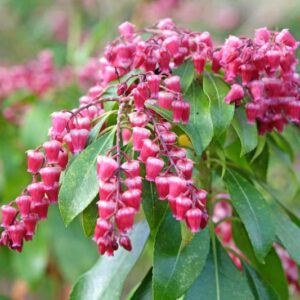
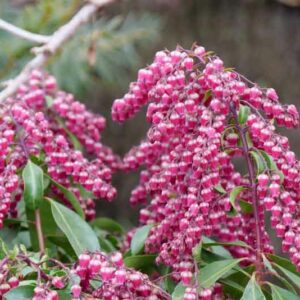
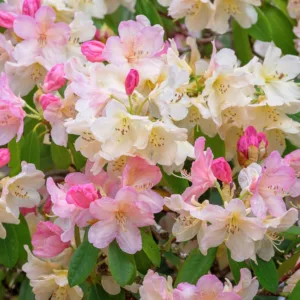
Flower clusters form at the tips of the stems and dangle on wiry stalks in early spring. Each inflorescence is a narrow, drooping panicle packed with dozens of small, urn shaped flowers that open over several weeks. Many varieties carry lightly fragrant blooms, usually white or creamy white, but some selection such as Valley Valentine and Valley Rose are prized for their deeper pink to red flowers. Flowers are a nectar source for early pollinators at a time when little else is in bloom.
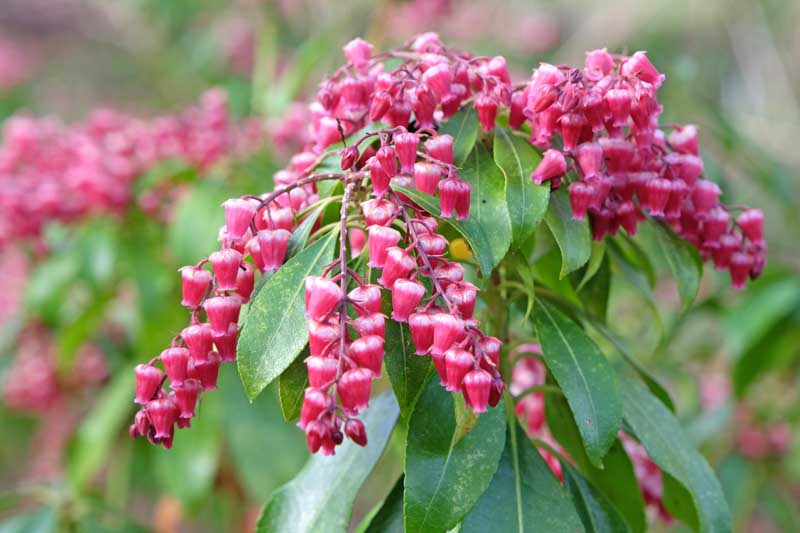
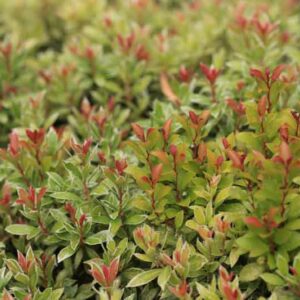
Foliage is a big part of the appeal. Mature leaves are lance shaped, leathery, and evergreen. New growth creates the drama. On cultivars such as Mountain Fire and Red Head, fresh leaves emerge bright scarlet then slowly mature to deep green. Flaming Silver, Carnaval, and Little Heath add striking variegation, with creamy or silver white edging that lights up shade and plays beautifully with dark conifers and glossy camellias.
Pieris is reliably hardy in most cool temperate gardens, roughly USDA Zones 5 to 8, with some selections coping in sheltered Zone 4 conditions. It enjoys climates with cool to mild summers and even moisture. In hotter regions, afternoon shade and thick mulch help keep roots cool and foliage fresh. In very windy or exposed spots, it can suffer from leaf scorch, so a protected site is best.
Pieris japonica is one of the most versatile evergreen shrubs for shade and acid loving gardens.
While Pieris japonica is not a major wildlife magnet like some native shrubs, it still offers useful habitat. The dense evergreen branches provide shelter and nesting spots for small birds, and the early spring flowers supply nectar for emerging pollinators, bees and butterflies, when little else is in bloom.
Another big plus of Pieris japonica is its general resistance to browsing. The foliage is not appealing to most deer or rabbits, thanks to its tough texture and natural compounds. In many gardens it is classed as deer resistant, making it a valuable evergreen in areas with heavy browsing pressure.
No plant is completely deer proof, but compared with tasty shrubs like roses or hydrangeas, Japanese andromeda is usually far down the menu and often left alone even in lean seasons.
Pieris japonica prefers steady moisture rather than true drought. Once established in humus rich, well mulched, acidic soil it will tolerate short dry spells, especially in partial shade. However, prolonged drought and hot, dry winds can stress the plant, leading to leaf scorch, bud drop, and general decline. For the best performance, think cool woodland – moist but well drained soil, not baking, exposed, or gravelly sites.
Like many members of the heath family, Pieris japonica is considered poisonous if ingested. Leaves, flowers, and nectar contain grayanotoxins that can affect people, pets, and livestock if eaten in quantity. Symptoms can be serious, so this is strictly an ornamental shrub, not an edible or medicinal plant.
In normal garden use toxicity is rarely an issue because the foliage is bitter and unpalatable. Still, avoid planting where grazing animals have free access and teach children not to chew leaves or flowers.
Pieris japonica is generally well behaved and non invasive in gardens. It forms a slowly expanding shrub rather than running by suckers or aggressive rooting. Seedlings may appear occasionally under mature plants, but they are easy to identify and remove or transplant if you do not want extras.
Because it stays close to where you plant it and does not spread aggressively into wild areas, Japanese andromeda is a safe choice for shade and woodland style landscapes where you want long lived, evergreen structure without constant control work.
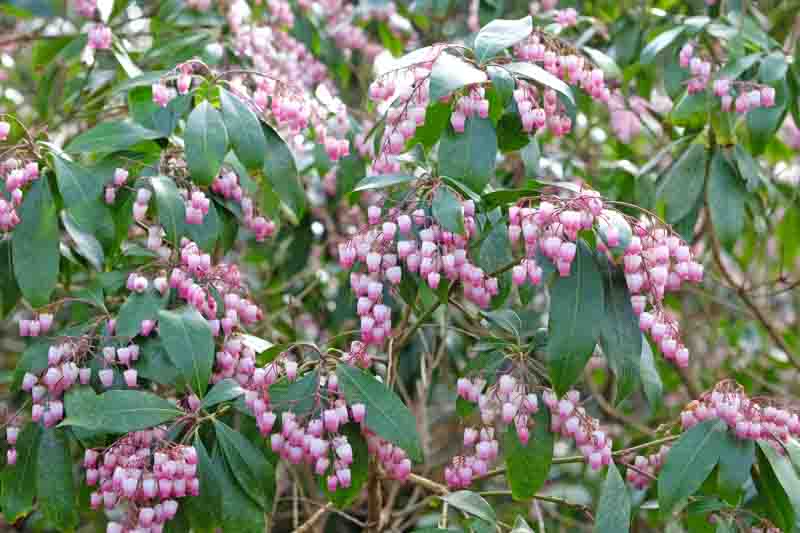
One of the joys of Pieris japonica is the huge range of named varieties. Some focus on dazzling new growth color, others on compact size or variegated foliage, and several are award winning for reliability. Here are some of the most popular Japanese pieris cultivars to consider.
| Cultivar | Approx. Size | Foliage Highlights | Flower Color and Season | Best Use |
|---|---|---|---|---|
| ‘Bonfire’ | About 3 ft x 3 ft | Deep red new growth maturing to dark green on a compact, rounded shrub | Creamy white bells in mid to late spring | Small gardens, containers, front of woodland borders |
| ‘Carnaval’ | 3 to 5 ft tall, 2 to 3 ft wide | Glossy green leaves with striking white margins, colorful new tips | Clusters of white, bell shaped flowers in early spring | Brightening shade, variegated focal point in mixed borders |
| ‘Cavatine’ | About 2-3 ft tall and wide | Dense, compact mound of rich green leaves | Profuse, pure white, fragrant bells in early spring | Dwarf pieris for small spaces, rock gardens, low containers, edging |
| ‘Debutante’ | Around 3-4 ft tall | Neat, compact growth and fresh green foliage | Cream to white flower panicles in spring | Foundation plantings, low evergreen structure in shade |
| ‘Flaming Silver’ | Roughly 3 to 5 ft tall and wide over time | Red new growth aging to green leaves edged with silver white | White, pendulous flower sprays in early spring | High impact specimen for shaded borders and front yards |
| ‘Katsura’ | Often 4 to 5 ft tall and wide | Wine red to burgundy new foliage maturing to glossy deep green | Soft pink, bell shaped flowers in late winter to early spring | Feature shrub near paths and patios where foliage can be enjoyed up close |
| ‘Little Heath’ | About 2 to 3 ft tall and wide | Dwarf, variegated foliage with cream margins and flushed new growth | Pink tinged buds opening to white or soft pink flowers in spring | Containers, front of borders, small patios and courtyards |
| ‘Mountain Fire’ | 4 to 8 ft tall and 3 to 6 ft wide | Brilliant red spring foliage that glows against older green leaves | White, lily of the valley style flowers in early spring | Larger evergreen backdrop, woodland hedge, or shady screen |
| ‘Prelude’ | Typically 1 to 2 ft tall, 2 to 3 ft wide | Dense, low mound of neat green foliage | Creamy white flower clusters in spring | Low hedge, border edging, under windows in partial shade |
| ‘Purity’ | About 5 ft tall in time | Clean, deep green foliage and upright habit | Large trusses of pure white flowers in spring | Classic white spring accent in shady borders and entrance plantings |
| ‘Red Head’ | Medium sized shrub, often 6 to 8 ft | Striking red new growth that stands above the older foliage like a red cap | White flower clusters that contrast with the foliage color show | Bold foliage statement in woodland beds and mixed shrub borders |
| ‘Valley Rose’ | Medium height, roughly 4 to 5 ft | Evergreen foliage with attractive new growth and well branched habit | Rose pink bells that age paler through spring | Soft pink spring color in semi shade, near paths or terraces |
| ‘Valley Valentine’ | Often 2 to 4 ft tall, 3-5 ft wide | Strong, upright evergreen framework with deep green leaves | Rich, deep red flower trusses in late winter and early spring | Dramatic winter to spring color in larger borders and woodland backdrops |
| Interstella® | Compact, roughly 3 to 4 ft | Neat, dense habit with rich green leaves and heavy bud set | Masses of long lasting, deep pink red bell flowers along the stems | High impact container or front border shrub with intense flowering display |
Pieris is a classic shade garden shrub. It thrives in partial shade, dappled shade, or morning sun with afternoon shade. In cool climates it can handle more sun, but in hotter regions direct afternoon sun often leads to yellowed foliage and scorched edges. Under high, open canopies of deciduous trees is ideal.
Think woodland floor. Pieris prefers moist, well drained, humus rich, slightly acidic soil (pH 5.0–6.5). Mix in leaf mold, composted bark, and ericaceous compost before planting if your soil is light or heavy. Good drainage is crucial. It will tolerate less strongly acid conditions than some ericaceous plants, but very chalky or compacted clay soils are a bad fit. Shade and Acid-Loving Plants you Can Trust
Keep the root zone evenly moist, particularly during the first couple of years. Avoid letting the plant dry out completely, especially in containers or during summer heat waves. Mulch helps even out moisture swings and keeps the fine surface roots from baking.
In decent soil, feeding needs are modest. Each spring, sprinkle a slow release ericaceous fertilizer around the drip line if new growth looks pale or weak. Avoid high nitrogen lawn fertilizers near the root zone; they can push soft growth at the expense of flowers and stress the plant in summer.
A 2 to 3 inch blanket of shredded bark, pine needles, or leaf mold keeps roots cool and happy. Maintain a small gap around the stem so mulch does not pile against the trunk. Renew each year as it breaks down to keep building that soft, acidic woodland soil that pieris loves.
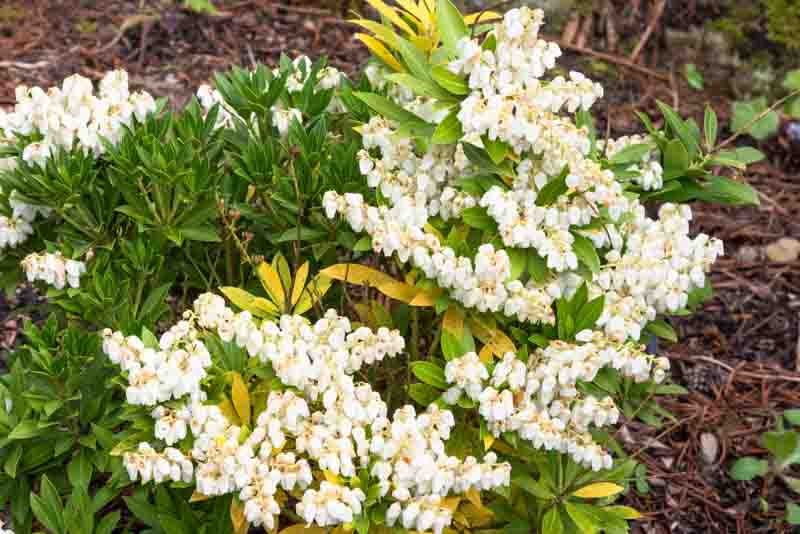
Pieris is naturally tidy and often needs only minimal pruning. The best time is just after flowering, before new buds for next year are set. At that point you can:
Avoid cutting hard into bare, old wood, as regrowth is slow and sometimes sparse. Gentle, regular trimming keeps the shrub dense and floriferous.
Pieris japonica, also called Japanese andromeda or lily of the valley shrub, is a broadleaf evergreen shrub in the heath family (Ericaceae). It is grown for its cascading clusters of bell shaped spring flowers and colorful new foliage that often emerges red or bronze before turning green.
Yes. Pieris japonica is a broadleaf evergreen shrub. It keeps its leaves year round, providing permanent structure and foliage in shade and woodland style plantings.
It prefers partial shade, cool roots, and moist but well drained, humus rich, acidic soil. It struggles in waterlogged clay and exposed, hot, dry sites.
Most cultivars are hardy in USDA Zones 5–8. Some tolerate sheltered Zone 4 conditions if protected from wind. In warm climates it needs afternoon shade.
Yes. It is an acid loving shrub that thrives at pH 5–6.5. In alkaline soil it often develops chlorosis (yellowing with green veins) unless grown in raised beds or containers with ericaceous compost. Use rainwater in hard-water areas.
Best in partial shade. It tolerates morning sun with afternoon shade. In hot climates too much sun causes leaf scorch, especially in variegated types.
The species can reach 6–10 ft tall and wide, but many cultivars are compact. Dwarf types stay 1–2 ft; mid sized types grow 3–6 ft.
It is a slow to moderate grower, adding roughly 4–8 inches (10–20 cm) per year in good conditions.
It blooms in late winter to early spring. Buds form the previous season and open into drooping clusters of small, bell shaped flowers that can last several weeks.
Prune immediately after flowering. Remove spent flower clusters and lightly shape the shrub. Avoid cutting back into old, bare wood because regrowth is slow.
Yes. All parts contain grayanotoxins and can be poisonous if eaten by people, pets, or livestock. It is strictly ornamental.
Generally yes. Pieris foliage is tough and unappealing to deer and rabbits, making it a reliable evergreen in browsing prone areas. No plant is completely deer proof, but pieris is usually avoided.
Yes. Compact cultivars thrive in containers with ericaceous compost. Keep soil evenly moist, fertilize in spring, and protect pots from harsh afternoon sun.
Usually chlorosis caused by alkaline soil or nutrient lock up. Check pH, improve soil, and use acid loving fertilizer. Overwatering, underwatering, or poor drainage may also cause yellowing.
No. It grows as a slowly expanding shrub and does not spread by runners. Occasional seedlings appear under mature plants but are easy to remove.
Pieris japonica is one of the most useful evergreen shrubs for shade and acid loving gardens. With a single plant you get spring flowers, colorful new foliage, and year round structure.
Choose a cultivar that matches your space, prepare a cool, moist, acidic root zone, and give it gentle shade. With just a little seasonal care, Japanese andromeda will quietly carry your woodland borders and foundation beds for years.
Updated: November 2025 • Reviewed by Gardenia Editors
| Hardiness |
4 - 8 |
|---|---|
| Heat Zones |
6 - 8 |
| Climate Zones | 2B, 3A, 3B, 4, 5, 6, 7, 8, 9, 14, 15, 16, 17 |
| Plant Type | Shrubs |
| Plant Family | Ericaceae |
| Genus | Pieris |
| Common names | Japanese Andromeda, Japanese Pieris |
| Exposure | Full Sun, Partial Sun |
| Season of Interest | Spring (Early, Mid), Winter |
| Height | 1' - 10' (30cm - 3m) |
| Spread | 2' - 8' (60cm - 240cm) |
| Spacing | 24" - 96" (60cm - 240cm) |
| Maintenance | Low |
| Water Needs | Average |
| Soil Type | Loam, Sand |
| Soil pH | Acid |
| Soil Drainage | Moist but Well-Drained, Well-Drained |
| Characteristics | Showy, Evergreen |
| Tolerances | Deer, Heat |
| Attracts | Bees, Butterflies |
| Garden Uses | Beds And Borders, Patio And Containers, Small Gardens |
| Garden Styles | City and Courtyard, Gravel and Rock Garden, Informal and Cottage |
| Toxic to Humans | High severity |
| Toxic to Cats | Toxic |
| Toxic to Dogs | Toxic |
| Toxic to Horses | Toxic |


| Hardiness |
4 - 8 |
|---|---|
| Heat Zones |
6 - 8 |
| Climate Zones | 2B, 3A, 3B, 4, 5, 6, 7, 8, 9, 14, 15, 16, 17 |
| Plant Type | Shrubs |
| Plant Family | Ericaceae |
| Genus | Pieris |
| Common names | Japanese Andromeda, Japanese Pieris |
| Exposure | Full Sun, Partial Sun |
| Season of Interest | Spring (Early, Mid), Winter |
| Height | 1' - 10' (30cm - 3m) |
| Spread | 2' - 8' (60cm - 240cm) |
| Spacing | 24" - 96" (60cm - 240cm) |
| Maintenance | Low |
| Water Needs | Average |
| Soil Type | Loam, Sand |
| Soil pH | Acid |
| Soil Drainage | Moist but Well-Drained, Well-Drained |
| Characteristics | Showy, Evergreen |
| Tolerances | Deer, Heat |
| Attracts | Bees, Butterflies |
| Garden Uses | Beds And Borders, Patio And Containers, Small Gardens |
| Garden Styles | City and Courtyard, Gravel and Rock Garden, Informal and Cottage |
| Toxic to Humans | High severity |
| Toxic to Cats | Toxic |
| Toxic to Dogs | Toxic |
| Toxic to Horses | Toxic |
How many Pieris japonica (Japanese Andromeda) do I need for my garden?
| Plant | Quantity | |
|---|---|---|
| Pieris japonica (Japanese Andromeda) | N/A | Buy Plants |
Create a membership account to save your garden designs and to view them on any device.
Becoming a contributing member of Gardenia is easy and can be done in just a few minutes. If you provide us with your name, email address and the payment of a modest $25 annual membership fee, you will become a full member, enabling you to design and save up to 25 of your garden design ideas.
Join now and start creating your dream garden!
Create a membership account to save your garden designs and to view them on any device.
Becoming a contributing member of Gardenia is easy and can be done in just a few minutes. If you provide us with your name, email address and the payment of a modest $25 annual membership fee, you will become a full member, enabling you to design and save up to 25 of your garden design ideas.
Join now and start creating your dream garden!