Passion Flower 'Possum Purple', Possum Purple Passion Vine, Possum Purple Passionflower, Possum Purple Passionvine
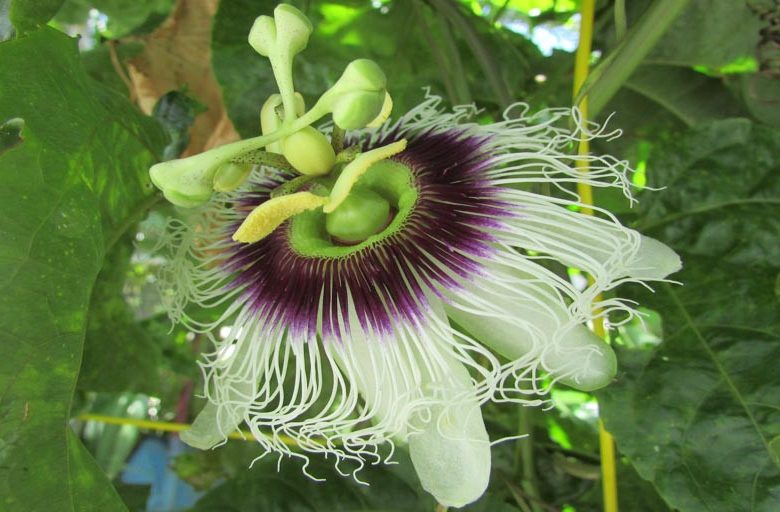
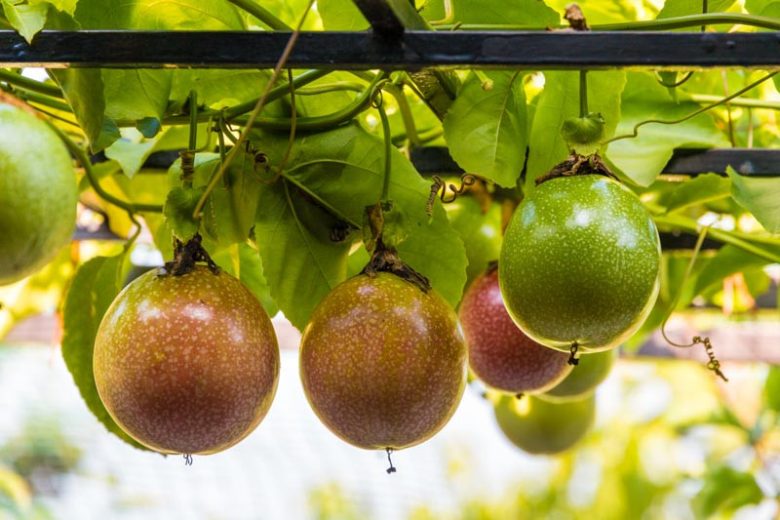
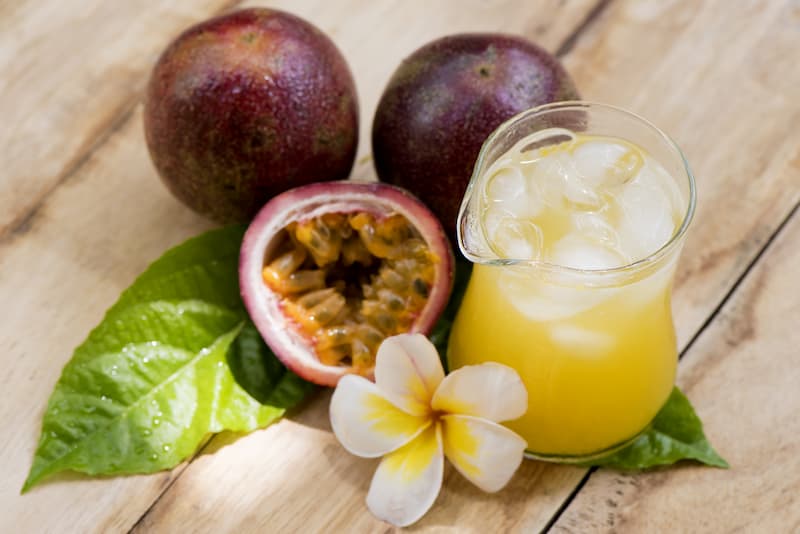


Passiflora edulis ‘Possum Purple’ is a vigorous, self-pollinating cultivar of the purple passion fruit known for its uniquely sweet flavor, showy flowers, and exceptional cold tolerance. Like its wild relative, it hails from South America but thrives in home gardens across USDA zones 9–11. Loved for both its ornamental value and juicy fruit, ‘Possum Purple’ adds bold color and flavor to arbors, fences, and garden drinks alike.
The passion fruit plant belongs to the Passifloraceae family, famed not just for its edible fruit but also for the intricate passion flower. Among these botanical floral beauties are Passiflora coccinea, P. alata, P. incarnata, P. racemosa, P. lutea, and the ravishing P. caerulea. While not all species bear edible fruit, they are treasured for their ornate blooms and fast-climbing growth.
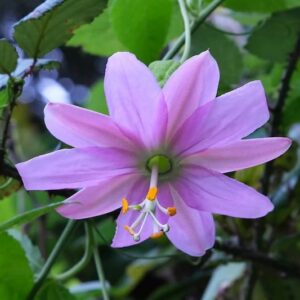
‘Possum Purple’ is a climbing perennial vine with coiled tendrils, dark green glossy leaves, and show-stopping purple and white flowers. It is grown for its highly aromatic, edible fruit and fast growth.
While the species is native to South America, ‘Possum Purple’ is a cultivated variety adapted for ornamental and edible use in subtropical to tropical gardens across the globe.
This is a vigorous, evergreen to semi-evergreen vine with a rambling, sprawling growth habit. It develops long, flexible stems that twine and scramble in all directions if not pruned or trained. Without support, the plant may form dense ground-level thickets, but with vertical structure, it adopts a more upright, layered canopy of foliage and flowers. Its rapid growth and lateral branching make it ideal for covering large areas quickly in warm climates.
‘Possum Purple’ is a vigorous, climbing vine that typically reaches a height (vine length) of 20 to 30 feet (6 to 9 meters) when grown with support such as a trellis, arbor, or fence. The spread is generally up to 5 to 10 feet (1.5 to 3 meters) wide, though the vine can cover more area if allowed to ramble or if not pruned regularly. In containers or with heavy pruning, the plant can be kept more compact.
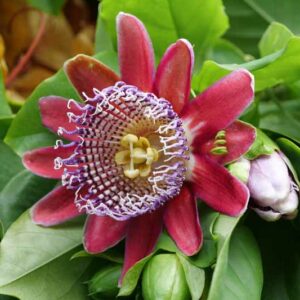
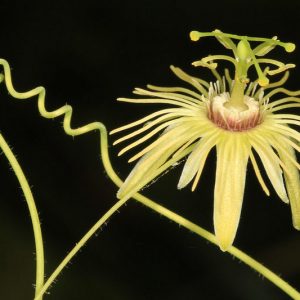
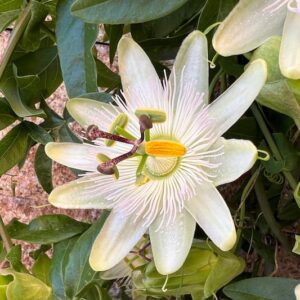
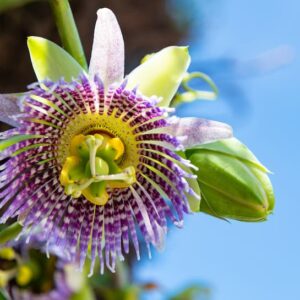
The vine produces spectacular, purple-centered flowers with white petals and corona filaments, each bloom lasting just one day. Despite their short bloom time, they appear in abundance and are self-fertile (only one plant is needed for fruit production), unlike some passion fruit varieties. The Most Beautiful Passion Flowers to Grow
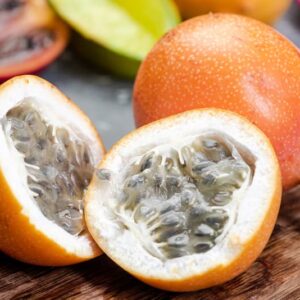
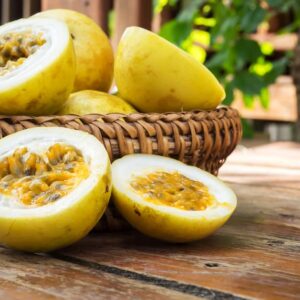
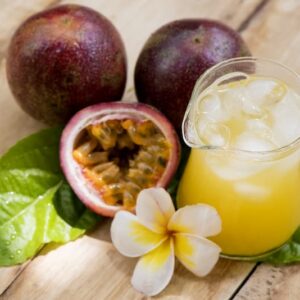
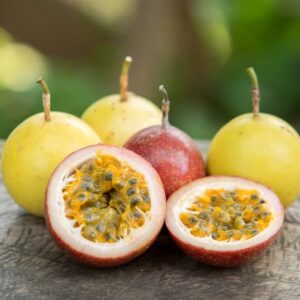
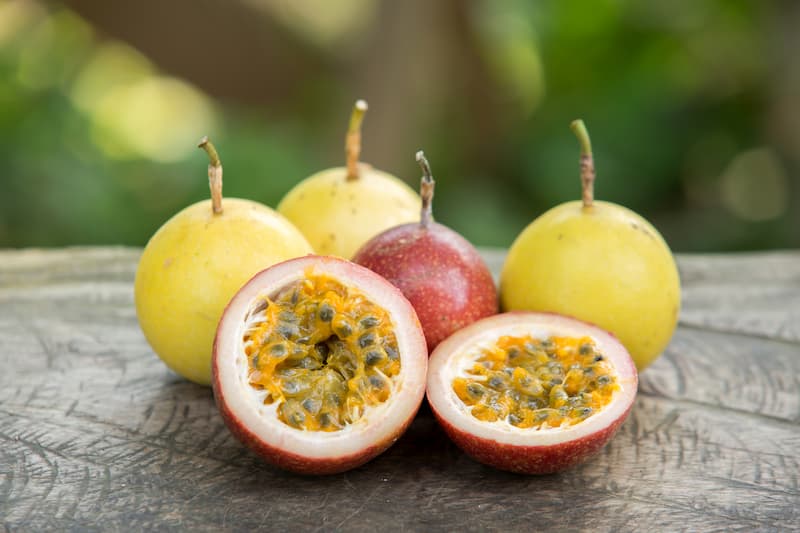
Fruits are dark purple, round to oval, and slightly smaller than standard yellow types. The rind is tough, enclosing fragrant golden pulp filled with edible seeds. ‘Possum Purple’ is prized for its sweeter, less acidic taste and juicy interior. The fruiting season is typically late summer to fall, but can vary by region. Passion Flower vs Passion Fruit: What’s the Difference?
Like other Passiflora species, the leaves are deep green, three-lobed, and glossy, providing a lush backdrop to the decorative blooms.
‘Possum Purple’ is notably more cold-tolerant than many passion fruit types, thriving in USDA zones 9–11. It can withstand brief dips into the upper 20s°F (-2°C) with protection. ‘Possum Purple’ can be grown in containers in cooler climates and moved indoors during winter.
‘Possum Purple’ flowers attract bees, honeybees, and butterflies. Its nectar-rich blooms also support beneficial insects in the ecosystem.
While the pulp of ripe passion fruit is safe and widely consumed, other parts of the plant require caution. The unripe fruit and the peel, especially in yellow varieties, contain cyanogenic glycosides, which can release cyanide in the body if consumed in large quantities. These compounds break down as the fruit ripens. Passion fruit may also trigger allergic reactions in individuals sensitive to latex or related tropical fruits such as kiwi and papaya. The leaves are sometimes used in herbal teas but should not be consumed in large amounts without medical guidance.
Although fast-growing, ‘Possum Purple’ is not considered invasive in managed gardens. Regular pruning and container growing keep it in check.
| Nutrient | Per 100g (Raw Fruit) |
|---|---|
| Calories | 97 kcal |
| Carbohydrates | 23 g |
| Fiber | 10.4 g |
| Sugars | 11.2 g |
| Protein | 2.2 g |
| Fat | 0.7 g |
| Vitamin C | 33% DV (30–33 mg) |
| Vitamin A | 8% DV (1274 IU) |
| Iron | 1.6 mg (1.6–3.6% DV) |
| Potassium | 348 mg (1.8–2.4% DV) |
| Magnesium | 29 mg |
| Phosphorus | 68 mg |
| Folate | 14 mcg |
| Water | 72.9 g |
DV = Daily Value based on a 2,000-calorie diet. Nutritional values may vary by variety and ripeness.
Passion fruit isn’t just delicious—it’s packed with nutrients and health-promoting compounds. Here are some of its most valuable benefits:
Note: Some individuals with latex allergies may also be sensitive to passion fruit. Always try in small amounts if unsure.
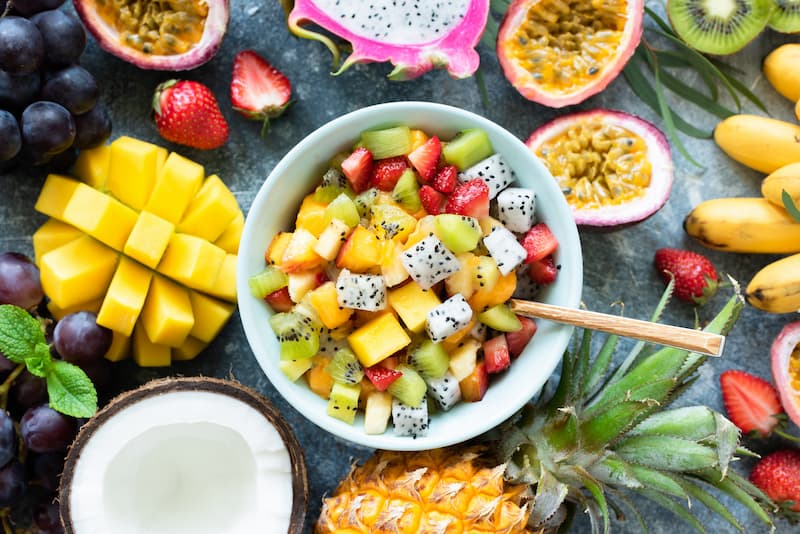
To enjoy fresh passion fruit, slice the fruit in half and scoop out the pulp with a spoon. The seeds are crunchy and edible, and the pulp has a juicy, tropical tang. Many people eat it plain, while others add a touch of sugar or lime juice to enhance the flavor. Passion fruit pairs well with other tropical fruits (like mango or pineapple) in salads or desserts
Scoop out the pulp and strain it to separate the seeds if you prefer a smooth drink. Blend the juice with water and sweetener to taste. You can also boil it down to make passion fruit syrup or reduce it into a concentrate for passion fruit liqueur or desserts.
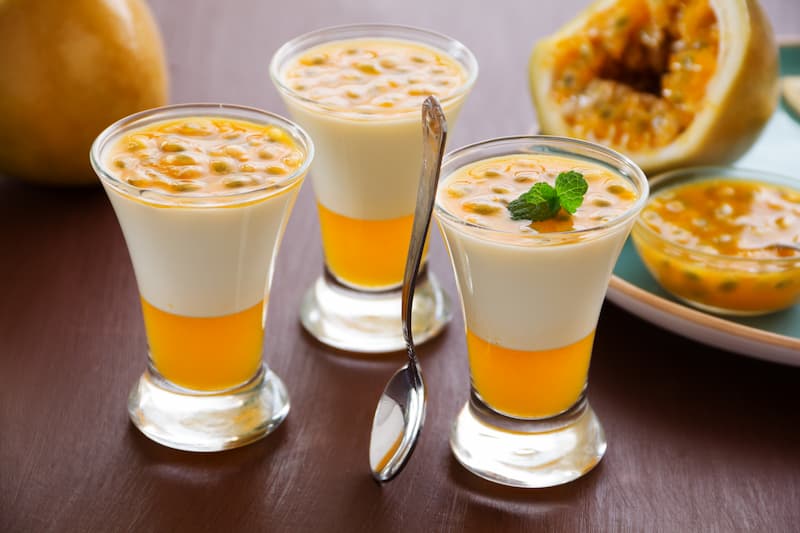
Use passion fruit puree as a vibrant topping for cheesecakes, panna cottas, or pavlovas. It can also be folded into whipped cream, yogurt, or used to glaze seafood dishes.
Add a splash of passion fruit juice to iced tea, smoothies, or sparkling water. It’s a star ingredient in tropical cocktails like the passion fruit margarita and the ever-popular passion fruit martini.
The tartness of passion fruit makes it ideal for preserves. Combine pulp with sugar and pectin to create tangy spreads perfect for toast or pastry fillings.
If you don’t have a knife, press a ripe fruit between your palms until the skin splits open. It’s messy, but deliciously effective.
Growing a passion fruit vine is both rewarding and relatively easy if you live in a warm climate. With the right support and care, Passiflora edulis can quickly transform a sunny space into a lush, fruit-bearing oasis filled with exotic flowers and delicious berries.
Passion fruit thrives in tropical and subtropical regions. It grows best in USDA zones 9–11 and prefers temperatures between 68°F and 82°F (20°C to 28°C). It is sensitive to frost—especially young plants—so protection is necessary in cooler climates. In colder areas, grow it in containers and move it indoors during winter.
Provide full sun—at least 6 hours daily—for optimal growth and fruiting. In hot inland zones, partial afternoon shade can prevent leaf scorch.
Well-drained, sandy loam with a slightly acidic to neutral pH (6.5–7.5) is ideal. Avoid heavy or poorly draining soils to prevent root rot. Raised beds or mounds can improve drainage. Mulch around the base to retain moisture and suppress weeds.
Keep the soil consistently moist, especially during flowering and fruiting seasons. Avoid waterlogging, which can promote fungal issues. Deep watering is better than frequent shallow watering, especially in dry or windy conditions. Mulching to retain moisture and suppress weeds is standard practice.
Feed monthly with a balanced fertilizer (e.g., 10-10-10 or 5-5-5) during the active growing season. Too much nitrogen can lead to leafy growth at the expense of flowers and fruit. Adding compost or aged manure annually improves fertility.
Passion fruit vines need a sturdy support system. Train them to climb along fences, trellises, pergolas, or wires. As the vine grows, guide new shoots onto the structure and prune side shoots to encourage airflow and fruit development.
For optimal growth, vines should be spaced at least 10 feet (3 m) apart to allow for ample airflow and sunlight
Prune in late winter or early spring to remove old wood, control size, and promote new growth. Light pruning can also be done after harvest. Regular pruning improves sunlight penetration, encourages flowering, and prevents the vine from becoming tangled or overgrown.
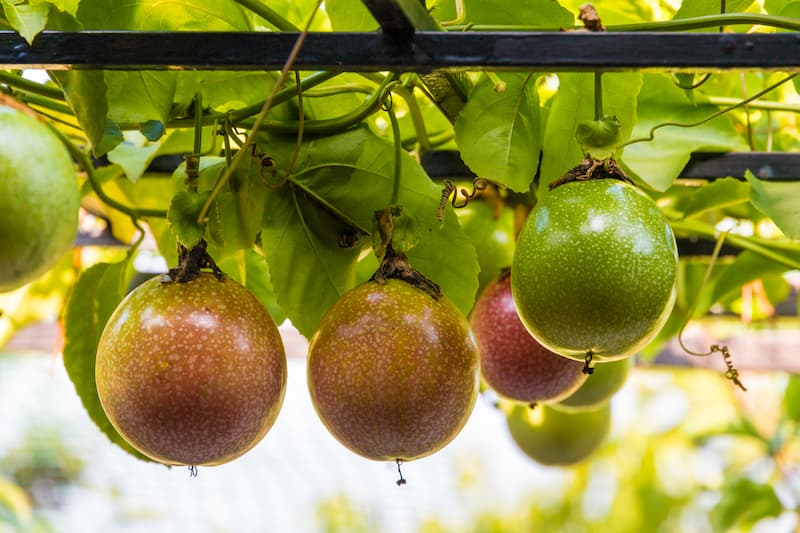
Harvesting passion fruit at the right time ensures the best flavor and juiciness. Ripe fruit is typically the sweetest and most aromatic—perfect for fresh eating or processing into juice, syrup, or desserts.
Passion fruit is usually ready for harvest 70–90 days after flowering. The fruit changes color as it ripens—purple varieties turn deep purple, while yellow ones become bright golden. A ripe fruit will feel heavy, develop a slight give when squeezed, and may wrinkle slightly. For peak ripeness, allow fruit to fall naturally to the ground and collect it daily.
If harvesting manually, snip the fruit from the vine using clean pruning shears, leaving a short stem attached. Handle fruits gently to avoid bruising, especially if they are to be stored or transported. Always harvest in dry weather to reduce the risk of fungal infections.
The pulp can be processed into syrup, jam, or jelly. For homemade preserves, combine passion fruit juice with sugar and pectin, and store it in sterilized jars. Pulp can also be frozen with or without sugar for later use in smoothies, baked goods, or cocktails.
‘Possum Purple’ passion fruit is a named cultivar, so propagation by seed is not recommended if you want to preserve its specific traits. Seed-grown plants may not produce fruit identical to the parent. However, seeds can still be used to grow vigorous passion fruit vines for ornamental or general fruiting purposes.
To preserve the traits of ‘Possum Purple’, propagation by cuttings is highly recommended.
Grafting is another way to propagate ‘Possum Purple’ while improving resistance to soil-borne diseases. It is especially useful in commercial or disease-prone settings.
For commercial production, advanced techniques like micropropagation (tissue culture) are also used, but these are typically limited to nurseries and research settings.
Passion fruit vines can face a variety of pest and disease issues that affect growth, flowering, and fruit production. Monitoring your plants regularly and acting early can make a big difference.
Passion fruit is the edible berry of the tropical Passiflora vine. Known for its firm rind and aromatic, seed-filled pulp, it comes in several varieties—most notably the purple Passiflora edulis and the yellow P. flavicarpa.
Grow passion fruit in full sun with well-draining, slightly acidic soil. It needs a strong trellis or support to climb. Plant in spring after frost has passed, using seeds or nursery-grown seedlings.
Yes. You can harvest seeds from ripe store-bought fruit. Rinse and dry them before planting in moist soil. Germination may take anywhere from a few weeks to several months.
With proper care, passion fruit vines begin producing flowers and fruit within 18 to 24 months of planting.
Passion fruit is a powerhouse of vitamin C, vitamin A, dietary fiber, and antioxidants. It’s low in calories and contains plant compounds like flavonoids that support immunity and fight inflammation.
Ripe passion fruit develops a rich purple or golden yellow skin, often with a slightly wrinkled texture. Fully ripe fruits may naturally fall from the vine.
Cut the fruit in half and scoop out the juicy pulp with a spoon. The seeds are crunchy and edible. Use the pulp in desserts, drinks, yogurt, or enjoy it fresh.
Passion fruit vines may suffer from root rot in poorly drained soils, poor fruit set from low pollination, or pest damage from aphids, caterpillars, and mites.
Allow 10 to 12 feet between vines to ensure proper air circulation and room for vigorous growth along supports.
Yes. The most common are purple and yellow forms of Passiflora edulis, but other edible species include sweet granadilla (P. ligularis) and giant granadilla (P. quadrangularis).
| Hardiness |
9 - 11 |
|---|---|
| Plant Type | Climbers, Fruits |
| Plant Family | Passifloraceae |
| Genus | Passiflora |
| Common names | Passion Fruit |
| Exposure | Full Sun, Partial Sun |
| Season of Interest | Summer (Early, Mid, Late), Fall |
| Height | 20' - 30' (6.1m - 9.1m) |
| Spread | 5' - 10' (150cm - 3m) |
| Spacing | 120" (3m) |
| Maintenance | Average |
| Water Needs | Average |
| Soil Type | Loam, Sand |
| Soil pH | Acid, Alkaline, Neutral |
| Soil Drainage | Moist but Well-Drained |
| Characteristics | Showy, Fruit & Berries, Evergreen, Semi-Evergreen |
| Attracts | Bees, Butterflies |
| Garden Uses | Arbors, Pergolas, Trellises, Patio And Containers, Wall-Side Borders, Walls And Fences |
| Garden Styles | Informal and Cottage, Mediterranean Garden |
| Toxic to Humans | No known toxicity |
| Toxic to Cats | No known toxicity |
| Toxic to Dogs | No known toxicity |
| Toxic to Horses | No known toxicity |


| Hardiness |
9 - 11 |
|---|---|
| Plant Type | Climbers, Fruits |
| Plant Family | Passifloraceae |
| Genus | Passiflora |
| Common names | Passion Fruit |
| Exposure | Full Sun, Partial Sun |
| Season of Interest | Summer (Early, Mid, Late), Fall |
| Height | 20' - 30' (6.1m - 9.1m) |
| Spread | 5' - 10' (150cm - 3m) |
| Spacing | 120" (3m) |
| Maintenance | Average |
| Water Needs | Average |
| Soil Type | Loam, Sand |
| Soil pH | Acid, Alkaline, Neutral |
| Soil Drainage | Moist but Well-Drained |
| Characteristics | Showy, Fruit & Berries, Evergreen, Semi-Evergreen |
| Attracts | Bees, Butterflies |
| Garden Uses | Arbors, Pergolas, Trellises, Patio And Containers, Wall-Side Borders, Walls And Fences |
| Garden Styles | Informal and Cottage, Mediterranean Garden |
| Toxic to Humans | No known toxicity |
| Toxic to Cats | No known toxicity |
| Toxic to Dogs | No known toxicity |
| Toxic to Horses | No known toxicity |
How many Passiflora edulis ‘Possum Purple’ (Passion Fruit) do I need for my garden?
| Plant | Quantity | |
|---|---|---|
| Passiflora edulis ‘Possum Purple’ (Passion Fruit) | N/A | Buy Plants |
Create a membership account to save your garden designs and to view them on any device.
Becoming a contributing member of Gardenia is easy and can be done in just a few minutes. If you provide us with your name, email address and the payment of a modest $25 annual membership fee, you will become a full member, enabling you to design and save up to 25 of your garden design ideas.
Join now and start creating your dream garden!
Create a membership account to save your garden designs and to view them on any device.
Becoming a contributing member of Gardenia is easy and can be done in just a few minutes. If you provide us with your name, email address and the payment of a modest $25 annual membership fee, you will become a full member, enabling you to design and save up to 25 of your garden design ideas.
Join now and start creating your dream garden!