Honey Plant, Porcelainflower, Porcelain Flower, Wax Plant

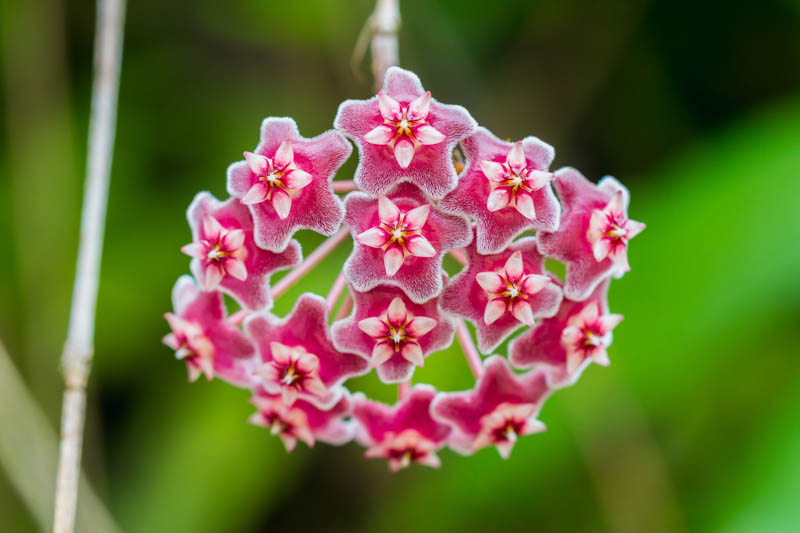
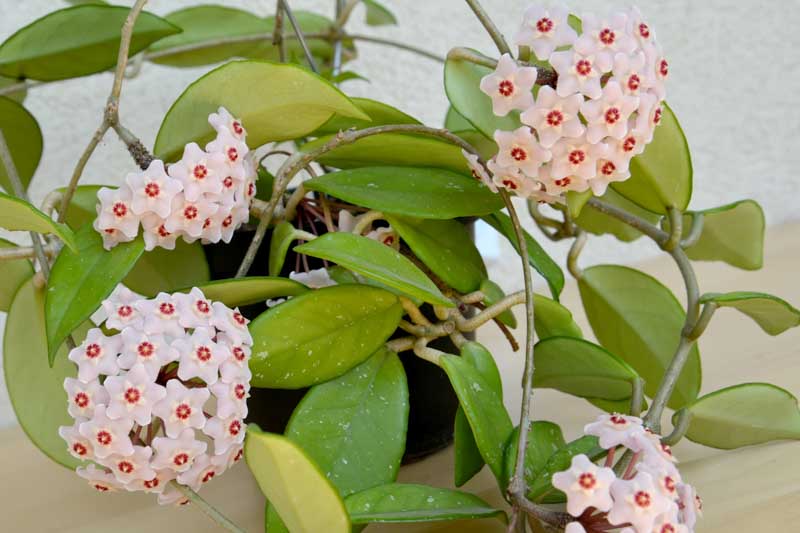
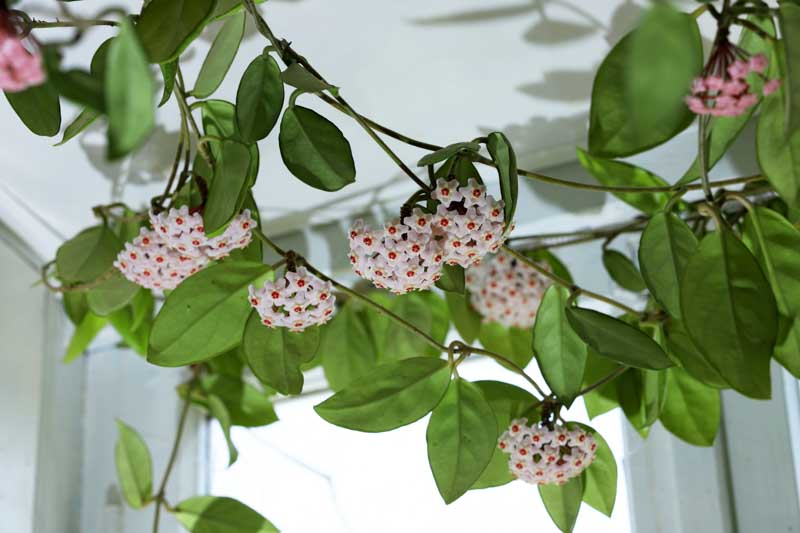
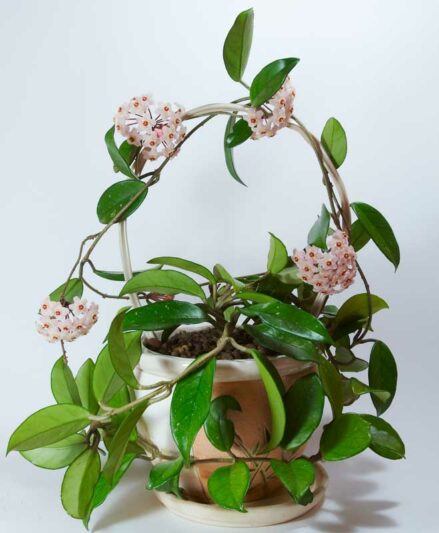


Hoya carnosa, better known as the wax plant, is one of those houseplants that people fall in love with and keep for decades. With its thick, glossy leaves, sweetly scented flowers, and easygoing nature, it’s a fabulous choice whether you’re just starting out with plants or already have a full indoor jungle. This climbing vine can trail, climb, and gracefully drape, making it as versatile as it is beautiful.
Summary: A classic, long-lived evergreen climbing or trailing vine with thick, glossy leaves and clusters of fragrant, star-shaped flowers.
Use: Perfect for hanging baskets, trellises, shelves, and bright indoor corners.
Highlight: Blooms from the same spurs again and again, with uniquely waxy, porcelain-like flowers and a sweet scent, especially in the evening.
Note: Loves bright, indirect light and is happiest when kept slightly root-bound.
| Botanical Name | Hoya carnosa |
|---|---|
| Family | Apocynaceae (Dogbane Family) |
| Common Names | Wax Plant, Porcelain Flower, Honey Plant |
| Native Range | East Asia and Australia |
| Plant Type & Habit | Evergreen climber or trailer with long, flexible stems and thick, waxy leaves. |
| Hardiness (approx. USDA) | Zones 10–11 (grown indoors in cooler climates) |
| Size | Indoors: 3–6 ft (90–180 cm); outdoors in warm climates: up to 12–20 ft (3.6–6 m). |
| Sun & Exposure | Bright, indirect light; shield from harsh midday sun. |
| Soil | Well-draining mix, such as orchid bark + perlite + potting soil. |
| Seasonal Interest | Blooms mainly from spring to fall, often fragrant in the evening. |
| Primary Uses | Indoor décor, hanging baskets, trellises, collectors’ plant. |
Let’s get to know this plant a little better. Hoya carnosa combines durability with elegance. Once it’s happy in your home, it can reward you with trailing vines, glossy leaves, and those famous clusters of waxy flowers that look almost too perfect to be real.
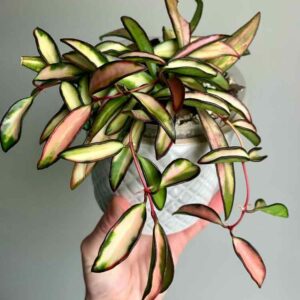
One of the first things you’ll notice is the foliage. The leaves are thick, leathery, and evergreen, with a natural glossy sheen that gives the plant its “wax plant” nickname. Most types have deep green, elliptical leaves about 2–4 in. (5–10 cm) long, but many varieties show off variegation in white, cream, yellow, or even pink. These sturdy leaves also store water, which is why Hoya carnosa can shrug off a missed watering now and then.
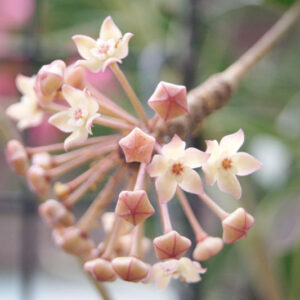
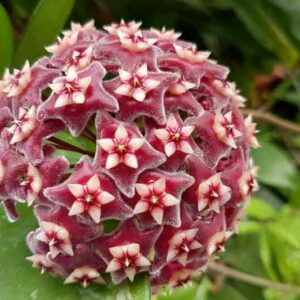
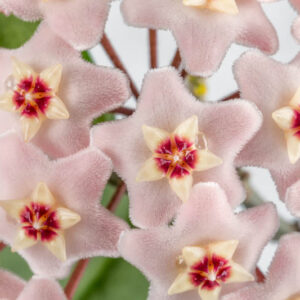
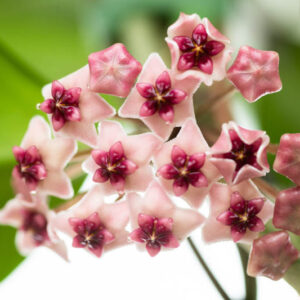
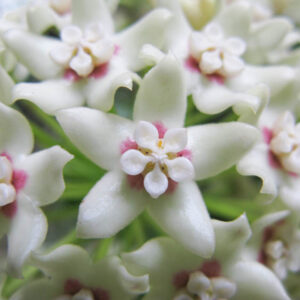
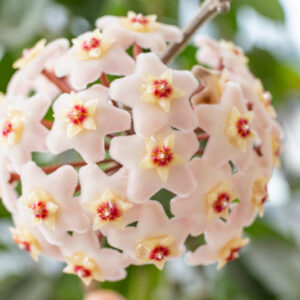
The real showstopper, though, is the flowers. Hoya carnosa produces clusters of waxy, star-shaped blooms that look like tiny porcelain decorations. They can be pink, white, or red-centered, and they often release a sweet, rich fragrance, especially in the evening. Under good conditions, flowering typically occurs from spring to fall, and older, well-established plants tend to bloom more generously.
The flowers form on short, stubby structures called peduncles or “spurs.” These are very important: don’t cut them off. The plant will send out new flowers from the same spurs year after year.
Hoya carnosa is a flexible grower. Give it a trellis or a moss pole, and it will climb; place it in a hanging basket, and it will trail beautifully.
This makes it an excellent candidate for shelves, hanging pots, and plant walls where you want some graceful, cascading greenery.
In the wild, Hoya carnosa is native to East Asia and Australia, where it grows as an epiphytic or semi-epiphytic climber, clinging to trees and rocks in warm, humid forests. It belongs to the dogbane family, Apocynaceae, alongside other ornamental favorites like
plumeria, periwinkle, mandevilla, and oleander.
Good news for pet parents and families: Hoya carnosa is considered non-toxic to pets and humans, making it a safe and stylish candidate for most households.
Hoya carnosa is not regarded as invasive. It’s typically grown indoors, in greenhouses, or in controlled outdoor plantings in warm climates.
This plant isn’t just loved on social media: it has real horticultural credentials. Hoya carnosa has received the prestigious Award of Garden Merit from the Royal Horticultural Society, recognizing its strong garden performance and overall reliability.
The best part about Hoya carnosa? Once you dial in its basic needs, it’s surprisingly low-maintenance. Let’s walk through how to keep it thriving.
Hoya carnosa loves bright, indirect light. Think of it as a plant that wants to live near a bright window, but not in the harsh glare of direct midday sun.
This plant really appreciates air around its roots. A standard heavy potting soil tends to stay too wet, so you’re better off with a loose, chunky mix. Good options include:
Also, Hoyas often bloom better when they’re a little snug in their pots, so there’s no rush to repot them frequently.
If you’re worried about overwatering plants, Hoya carnosa will probably get along with you very well.
The thick leaves act like mini water reservoirs, so the plant can handle short dry spells much better than soggy conditions.
Hoya carnosa fits right into normal indoor temperatures:
As for humidity, it appreciates medium to high levels. If your air is very dry, especially in winter:
During the active growing season, a little extra nutrition goes a long way.
Pruning is mostly about keeping your Hoya neat and encouraging fuller growth.
If you’re dreaming of those gorgeous flower clusters, here are a few things that help:
Hoya carnosa is not a plant that demands frequent repotting.
Propagating Hoya carnosa is rewarding and surprisingly easy. It’s a great way to share your plant with friends, or just grow your own collection.
Pick a healthy stem with at least two leaves and one node (the little joint where the leaves emerge).
Using clean, sharp scissors or pruning shears, cut just below a node. Try to avoid crushing the stem.
Water Rooting: Place the cutting in a jar of room temperature water, making sure at least one node is submerged. Change the water every few days. You should see roots form within a few weeks.
Soil Rooting: Dip the cut end into rooting hormone (optional) and plant the node into a moist, well-draining mix suitable for succulents or orchids. Keep the mix lightly moist but not soggy.
Set the cutting in a warm, bright spot with indirect light. Avoid harsh direct sun on the tender cutting.
Once roots are a few inches long (if rooting in water) or the cutting resists a gentle tug (if rooting in soil), you can pot it up into a small container with a well-draining Hoya mix.
Treat your new plant similarly to a mature Hoya, but:
– Protect it from strong direct sunlight.
– Keep humidity slightly higher if possible.
– Water gently until the root system is well established.
Hoya carnosa is generally a sturdy plant, but like all houseplants, it can occasionally run into pests or diseases. Here’s what to watch for and how to respond.
Mealybugs: These look like tiny white cottony blobs on stems and leaf joints.
Scale insects: Hard, dome-shaped bumps that cling to stems and leaves.
Spider mites: Very tiny pests that create fine webbing and cause speckled, yellowing leaves.
Root rot: Usually caused by waterlogged soil and poor drainage.
Gray mold (Botrytis): A fuzzy gray mold on leaves or stems, especially in cool, damp conditions.
Powdery mildew: Appears as a white, powdery coating on leaves.
Yellowing leaves:
Leaf drop:
No blooms:
Wrinkled leaves:
Most Hoyas, including Hoya carnosa, are happiest above 50°F (10°C). Anything below that for long periods can stress or damage the plant.
Yes, if you keep it indoors or in a mild climate. It’s not frost-tolerant, so protect it from freezing temperatures, cold drafts, and sudden temperature drops.
In warm climates or during summer in milder regions, Hoya carnosa can enjoy time outdoors as long as nighttime temperatures stay above 50°F (10°C). Just keep it in bright, indirect light and bring it inside before it gets cold.
With good care, Hoya carnosa can live for many years, often decades. It’s the kind of plant that can become a true heirloom, passed from one generation to the next.
The classic green Hoya carnosa is not rare and is widely available. However, some variegated forms and special cultivars can be more collectible and sought after by Hoya enthusiasts.
Updated: December 2025 • Reviewed by Gardenia Editors
| Hardiness |
10 - 11 |
|---|---|
| Plant Type | Houseplants, Climbers |
| Plant Family | Apocynaceae |
| Genus | Hoya |
| Exposure | Partial Sun |
| Season of Interest | Spring (Early, Mid, Late), Summer (Early, Mid, Late), Fall, Winter |
| Height | 3' - 20' (90cm - 6.1m) |
| Maintenance | Low |
| Water Needs | Average |
| Soil Type | Loam, Chalk, Sand |
| Soil pH | Acid, Alkaline, Neutral |
| Soil Drainage | Well-Drained |
| Characteristics | Plant of Merit, Showy, Evergreen, Fragrant |
| Native Plants | Australia |
| Tolerances | Humidity |
| Garden Uses | Hanging Baskets, Patio And Containers |
| Garden Styles | Mediterranean Garden |
| Toxic to Humans | No known toxicity |
| Toxic to Cats | Not toxic |
| Toxic to Dogs | Not toxic |
| Toxic to Horses | Not toxic |


| Hardiness |
10 - 11 |
|---|---|
| Plant Type | Houseplants, Climbers |
| Plant Family | Apocynaceae |
| Genus | Hoya |
| Exposure | Partial Sun |
| Season of Interest | Spring (Early, Mid, Late), Summer (Early, Mid, Late), Fall, Winter |
| Height | 3' - 20' (90cm - 6.1m) |
| Maintenance | Low |
| Water Needs | Average |
| Soil Type | Loam, Chalk, Sand |
| Soil pH | Acid, Alkaline, Neutral |
| Soil Drainage | Well-Drained |
| Characteristics | Plant of Merit, Showy, Evergreen, Fragrant |
| Native Plants | Australia |
| Tolerances | Humidity |
| Garden Uses | Hanging Baskets, Patio And Containers |
| Garden Styles | Mediterranean Garden |
| Toxic to Humans | No known toxicity |
| Toxic to Cats | Not toxic |
| Toxic to Dogs | Not toxic |
| Toxic to Horses | Not toxic |
How many Hoya carnosa (Wax Plant) do I need for my garden?
| Plant | Quantity | |
|---|---|---|
| Hoya carnosa (Wax Plant) | N/A | Buy Plants |
Create a membership account to save your garden designs and to view them on any device.
Becoming a contributing member of Gardenia is easy and can be done in just a few minutes. If you provide us with your name, email address and the payment of a modest $25 annual membership fee, you will become a full member, enabling you to design and save up to 25 of your garden design ideas.
Join now and start creating your dream garden!
Create a membership account to save your garden designs and to view them on any device.
Becoming a contributing member of Gardenia is easy and can be done in just a few minutes. If you provide us with your name, email address and the payment of a modest $25 annual membership fee, you will become a full member, enabling you to design and save up to 25 of your garden design ideas.
Join now and start creating your dream garden!