Sweet Woodruff, Sweet Woodruf, Sweet-scented Bedstraw, Sweetscented Bedstraw, Fragrant Bedstraw, Master Of The Woods, Wild Baby’s Breath, Asperula odorata
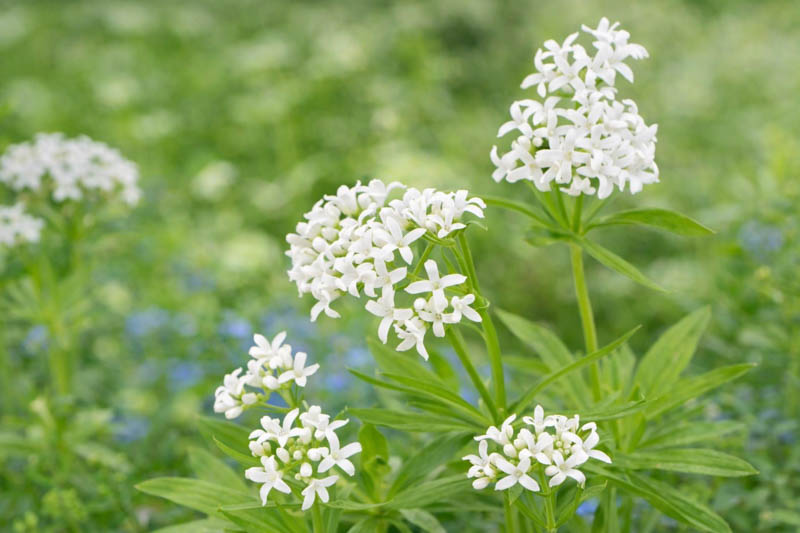


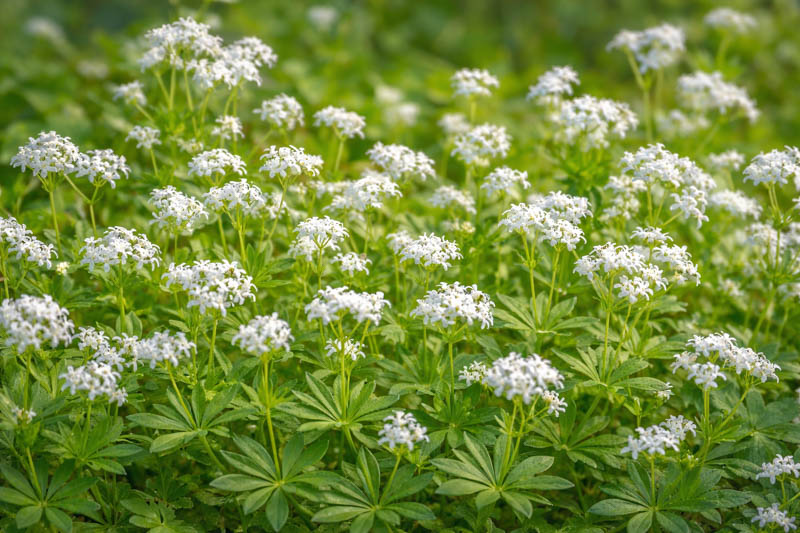
Galium odoratum, commonly known as Sweet Woodruff, is a beloved mat-forming perennial treasured for its soft emerald-green whorled foliage, delicate starry white flowers, and sweet scent reminiscent of freshly cut hay and vanilla. A staple in shade gardens across temperate regions, this compact woodland plant provides texture, fragrance, and seasonal interest while thriving in the cool, moist conditions many gardeners find challenging.
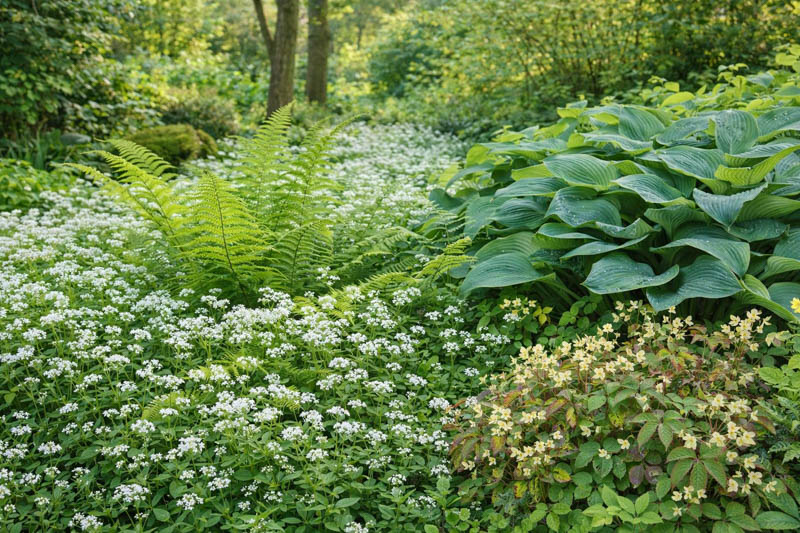
Forming a luxurious carpet of lush green leaves, Sweet Woodruff comes to life in late spring, when clusters of dainty white flowers rise above the foliage. Its aromatic intensity deepens when dried, making the plant a timeless favorite for sachets, potpourri, wreaths, and herbal crafts. Undemanding, virtually pest-free, deer-resistant, and naturally elegant, Galium odoratum is one of the most versatile low-maintenance groundcovers for shaded spaces, cottage gardens, naturalized plantings, and moist woodland borders.
Summary: A fragrant, mat-forming perennial groundcover with whorled, emerald-green leaves and delicate spring flowers.
Use: Shade gardens, groundcovers, woodland borders, rock gardens, naturalized plantings.
Highlight: Foliage becomes more aromatic when dried, ideal for sachets and potpourri.
Note: Thrives in moist, well-drained soils in part to full shade.
| Botanical Name | Galium odoratum |
|---|---|
| Family | Rubiaceae |
| Common Names | Sweet Woodruff, Wild Baby’s Breath, Sweetscented Bedstraw, Woodruff |
| Native Range | Much of Europe and Asia, including Spain, Ireland, Russia, Western Siberia, Turkey, Iran, the Caucasus, China, and Japan. |
| Plant Type and Habit | Herbaceous perennial with a creeping, mat-forming habit through slender rhizomes. |
| Hardiness (approx. USDA) | Hardy in USDA Zones 4 to 8 |
| Size | Typically 6 to 12 in. tall (15-30 cm) and spreading 12-24 in. (30-60 cm) or more over time. |
| Sun and Exposure | Thrives in part shade to full shade. |
| Soil | Average, medium to wet, well-drained soils; prefers humus-rich woodland soil. |
| Seasonal Interest | Late spring to early summer bloom; fragrant dried foliage year-round. |
| Primary Uses | Underplanting shrubs or perennials, groundcover, woodland beds, edging, shade gardens. |
Galium odoratum is a charming, shade-loving perennial known for its whorled leaves arranged in star-like patterns along slender stems. In late spring, it bursts into bloom with clusters of tiny white flowers that hover above the foliage like delicate lace. As the weather warms, the plant forms a lush, fragrant carpet ideal for shaded areas beneath trees, shrubs, or tall perennials.
Its fragrance becomes more pronounced when harvested and dried, releasing a sweet, vanilla-like aroma derived from natural coumarins. Historically, Sweet Woodruff was used to scent linens, flavor traditional May wine in Germany, and craft herbal remedies.
Sweet Woodruff is native to shaded woodlands across Europe and Asia, where it thrives in moist, humus-rich soils and dappled light. It has naturalized in parts of North America but is not native to the United States.
This perennial grows through slender rhizomes, forming soft mats that spread gradually. In ideal conditions, cool, moist, shady, it can expand more assertively, though it remains easily manageable with occasional division or trimming.
Sweet Woodruff blooms in late spring to early summer. The airy white flowers provide a light, ethereal presence and create beautiful contrast against the emerald foliage. Bloom time typically lasts several weeks.
The fruits are small and inconspicuous. Sweet Woodruff’s primary ecological value lies in offering seasonal nectar to small insects and providing shelter for ground-dwelling wildlife.
The soft green foliage remains attractive from spring through fall, with leaves releasing a stronger fragrance when dried. In cooler climates, the foliage may overwinter semi-evergreen.
Hardy in USDA Zones 4–8, Sweet Woodruff tolerates cool summers, moist shade, and mild winters.
Although not a major pollinator magnet, Sweet Woodruff provides nectar to early-season insects and offers ground-level habitat for small organisms in woodland settings.
Galium odoratum is widely regarded as deer resistant and generally avoided by rabbits due to its aromatic foliage.
While Sweet Woodruff prefers moist soils, it tolerates brief dry periods once established, especially in shady, cool environments.
Sweet Woodruff contains coumarin, which can be toxic in large quantities. Occasional ornamental or light culinary use is traditional, but pets and children should not be allowed to consume it freely, and medicinal or heavy internal use should be avoided unless guided by a professional.
In cool, moist climates, Sweet Woodruff can spread vigorously and may be considered invasive in some areas. Check local guidance and use barriers or regular division if needed.
Apply compost in spring; no fertilizer necessary in most gardens.
Sweet Woodruff is remarkably pest-free, though occasional issues may include:
Sweet Woodruff spreads by rhizomes and can form dense mats in cool, moist climates, but it is not considered invasive in most regions. Growth is easily controlled by dividing or edging the plant.
Yes. Sweet Woodruff thrives in full shade and maintains its lush green appearance, though flowering may be slightly reduced compared to plants grown in part shade.
bsolutely. It is an excellent underplanting choice for trees and shrubs, especially in areas with filtered shade and reasonably moist soil.
Yes. Deer and rabbits typically avoid Sweet Woodruff due to its aromatic foliage, making it a reliable groundcover in wildlife-prone areas.
While it is not commonly grown as a houseplant, its dried leaves are frequently used indoors for sachets, potpourri, and natural fragrance due to their sweet, hay-like scent.
Simply dig and divide sections of the rhizomes. Installing an underground edging barrier can also help contain growth.
Short periods of drought are tolerated once the plant is established, but prolonged dryness may cause the foliage to yellow. Moist, shaded conditions are ideal.
| Hardiness |
4 - 8 |
|---|---|
| Heat Zones |
5 - 8 |
| Climate Zones | 2, 3, 4, 5, 6, 15, 16, 17, A2, A3 |
| Plant Type | Herbs, Perennials |
| Plant Family | Rubiaceae |
| Common names | Sweet Woodruff |
| Exposure | Partial Sun, Shade |
| Season of Interest | Spring (Late), Summer (Early) |
| Height | 6" - 1' (15cm - 30cm) |
| Spread | 1' - 2' (30cm - 60cm) |
| Spacing | 12" - 24" (30cm - 60cm) |
| Maintenance | Low |
| Water Needs | Average |
| Soil Type | Chalk, Clay, Loam, Sand |
| Soil pH | Acid, Alkaline, Neutral |
| Soil Drainage | Moist but Well-Drained |
| Characteristics | Dried Arrangements, Fragrant, Showy |
| Native Plants | United Kingdom |
| Tolerances | Full Shade, Deer, Rabbit, Heat, Black Walnut, Fire |
| Garden Uses | Beds And Borders, Edging, Ground Covers, Underplanting Roses And Shrubs |
| Garden Styles | Gravel and Rock Garden, Informal and Cottage, Prairie and Meadow |
| Toxic to Humans | No known toxicity |
| Toxic to Cats | No known toxicity |
| Toxic to Dogs | No known toxicity |
| Toxic to Horses | No known toxicity |


| Hardiness |
4 - 8 |
|---|---|
| Heat Zones |
5 - 8 |
| Climate Zones | 2, 3, 4, 5, 6, 15, 16, 17, A2, A3 |
| Plant Type | Herbs, Perennials |
| Plant Family | Rubiaceae |
| Common names | Sweet Woodruff |
| Exposure | Partial Sun, Shade |
| Season of Interest | Spring (Late), Summer (Early) |
| Height | 6" - 1' (15cm - 30cm) |
| Spread | 1' - 2' (30cm - 60cm) |
| Spacing | 12" - 24" (30cm - 60cm) |
| Maintenance | Low |
| Water Needs | Average |
| Soil Type | Chalk, Clay, Loam, Sand |
| Soil pH | Acid, Alkaline, Neutral |
| Soil Drainage | Moist but Well-Drained |
| Characteristics | Dried Arrangements, Fragrant, Showy |
| Native Plants | United Kingdom |
| Tolerances | Full Shade, Deer, Rabbit, Heat, Black Walnut, Fire |
| Garden Uses | Beds And Borders, Edging, Ground Covers, Underplanting Roses And Shrubs |
| Garden Styles | Gravel and Rock Garden, Informal and Cottage, Prairie and Meadow |
| Toxic to Humans | No known toxicity |
| Toxic to Cats | No known toxicity |
| Toxic to Dogs | No known toxicity |
| Toxic to Horses | No known toxicity |
How many Galium odoratum (Sweet Woodruff) do I need for my garden?
| Plant | Quantity | |
|---|---|---|
| Galium odoratum (Sweet Woodruff) | N/A | Buy Plants |
Create a membership account to save your garden designs and to view them on any device.
Becoming a contributing member of Gardenia is easy and can be done in just a few minutes. If you provide us with your name, email address and the payment of a modest $25 annual membership fee, you will become a full member, enabling you to design and save up to 25 of your garden design ideas.
Join now and start creating your dream garden!
Create a membership account to save your garden designs and to view them on any device.
Becoming a contributing member of Gardenia is easy and can be done in just a few minutes. If you provide us with your name, email address and the payment of a modest $25 annual membership fee, you will become a full member, enabling you to design and save up to 25 of your garden design ideas.
Join now and start creating your dream garden!