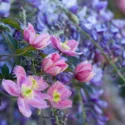
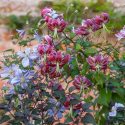
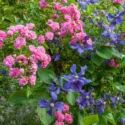
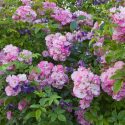
Chilean Glory Flower, Chilean Glory Creeper, Chilean Glory Vine, Glory Flower, Glory Vine, Beauty Vine, Chupa‑chupa, Lorito, Voqui, Calampelis scaber, Calampelis scabra, Eccremocarpus ruber, Eccremocarpus scaber var. Sepium, Eccremocarpus scaber var. Carmineus
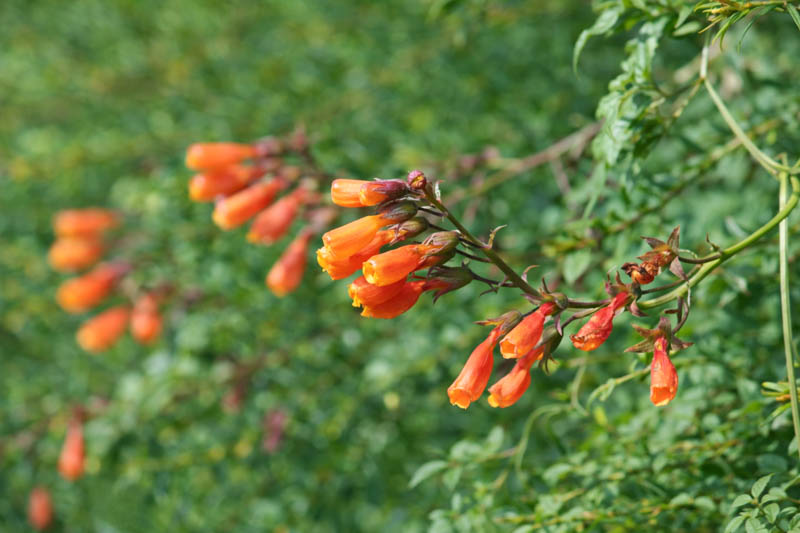
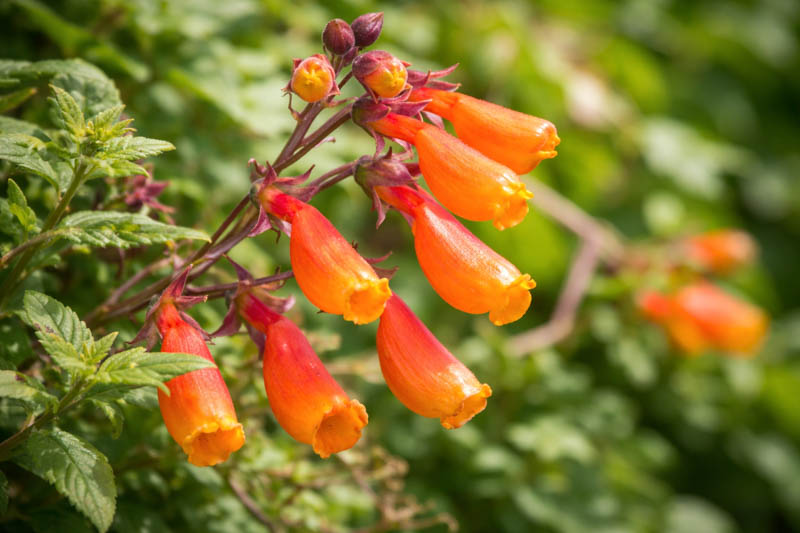


If you love vines that deliver bold color, nonstop blooms, and effortless charm, Eccremocarpus scaber, known widely as the Chilean Glory Flower, belongs high on your garden list. This lively, twining climber offers tubular, fire-colored flowers, delicate fern-like foliage, lightning-fast growth, and amazing wildlife value. It is the kind of plant that takes a plain fence or trellis and transforms it into a vibrant tapestry of motion and color.
Perfect for gardeners seeking low maintenance, high impact, and long-season interest, Eccremocarpus scaber thrives in full sun, tolerates heat, and attracts hummingbirds with an enthusiasm that is nothing short of impressive. Its soft, pinnate leaves create airy texture, while its clusters of orange-red, yellow, or salmon blossoms provide a dynamic, tropical feel without demanding tropical care.
Summary: A vibrant, evergreen twining vine with clusters of tubular blooms in warm sunset tones.
Use: Trellises, archways, fences, containers, wildlife gardens, cottage gardens.
Highlight: Extremely fast growing, long blooming, hummingbird attracting, and low maintenance.
Note: Short-lived perennial in warm climates; grown as an annual in cooler zones.
| Botanical Name | Eccremocarpus scaber |
|---|---|
| Family | Bignoniaceae |
| Common Names | Chilean Glory Flower, Glory Vine, Minestrone Vine |
| Native Range | Chile, Peru, and SW Argentina; naturalized in parts of Europe, New Zealand, and some mild coastal regions. |
| Plant Type and Habit | Evergreen to semi-evergreen twining vine with fast, airy growth. |
| Hardiness | Short-lived perennial in Zones 8–11; grown as an annual elsewhere. |
| Size | Up to 8–12 ft tall in one season, sometimes more in frost-free climates. |
| Sun and Exposure | Full sun (best flowering) to light shade. |
| Soil | Well-drained, moderately fertile soil; tolerates sandy or rocky sites. |
| Seasonal Interest | Blooms spring to fall, nearly year-round in frost-free areas. |
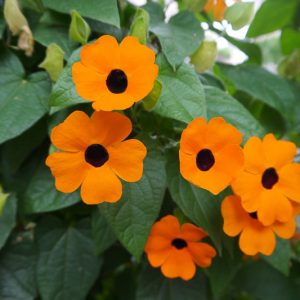
Eccremocarpus scaber is an exuberant, fast-growing vine beloved for its trumpet-shaped, nectar-rich flowers and elegant, divided foliage. Its airy, twining stems climb supports with ease, often reaching full height within a single season. The blooms, most commonly orange or red but also found in yellow and apricot shades, appear in generous clusters that draw the eye and energize the garden.
Indigenous to the warm valleys of Chile and Peru, this vine naturally thrives in sunny, dry, well-drained habitats. Its adaptability has allowed it to become popular in temperate gardens worldwide, especially regions with mild winters.
This species is exceptionally fast growing, making it ideal for covering structures, disguising unsightly spaces, or adding vertical layers quickly. It twines rather than clings, so it requires some form of support, wire mesh, trellis, arbor, or obelisk.
The tubular blooms are the star attraction. They appear from spring through late autumn and, where frost is absent, may continue year-round. The flowers are perfectly shaped for hummingbird feeding, delivering reliable nectar when other plants pause.
The delicate, fern-like leaves are odd-pinnate with tendril-like tips. The foliage remains evergreen to semi-evergreen in warm climates and adds a fine, lacy texture that contrasts beautifully with bold architectural plants.
After flowering, slender pods form containing numerous papery seeds. These germinate readily, allowing gardeners to propagate plants each year, even in colder regions.
Typically treated as a tender perennial hardy around Zones 8–10 (sometimes 8–11 in sheltered sites) and grown as a fast annual vine in colder climates. Best Climbing Plants That Thrive in USDA Zone 8
Hummingbirds adore this vine. The tubular flowers provide abundant nectar, and the long bloom season ensures continuous wildlife activity.
Generally deer resistant thanks to its foliage texture and low palatability.
Moderately drought tolerant once established. Performs well in Mediterranean conditions.
No toxicity has been reported for people or pets, but it is ornamental and not intended for consumption.
In New Zealand it is formally listed as an environmental weed and NPPA pest plant because of its rapid growth and prolific self‑seeding. In many temperate gardens elsewhere, it behaves as a self‑sowing ornamental that may naturalize along fences and disturbed sites, so deadheading and pod removal are recommended to limit spread.
Eccremocarpus scaber is not globally listed among the world’s worst invasive species, but it is officially listed as an environmental weed and National Pest Plant Accord (NPPA) species in New Zealand, where it is banned from sale and can spread in warm regions. In most other temperate gardens it behaves as a self-sowing ornamental that is easy to control with deadheading.
It is a short-lived perennial in Zones 8–11 but is grown as an annual in most cooler climates. Even as an annual, it grows fast enough to reach full climbing height in a single season.
It is an exceptionally fast-growing vine, typically reaching 8–12 feet in one season. In frost-free areas, it can grow even taller with continuous warm weather.
Yes. The tubular flowers are rich in nectar and perfectly shaped for hummingbird feeding. It is considered one of the best annual/perennial climbers for attracting hummingbirds to gardens.
Yes. It performs very well in pots when provided with a strong support such as an obelisk or trellis. Container-grown plants may need more frequent watering and feeding, but bloom heavily with good light.
Yes. It is a twining vine and requires something to wrap around, such as wire mesh, lattice, a fence, or a pole. Without support, it will sprawl and produce fewer flowers.
Poor flowering is usually caused by insufficient sun, too much nitrogen fertilizer, or overwatering. Full sun and lean, well-drained soil encourage far better bloom production.
Light pruning during the season helps maintain shape and encourages branching. In frost-free climates, hard pruning in early spring rejuvenates older vines and stimulates fresh flowering growth.
It is moderately drought tolerant once established. It prefers regular water during its first season, then thrives with minimal supplemental irrigation in Mediterranean or summer-dry climates.
Kew Plants of the World Online
Flora of Chile botanical records
Updated: December 2025 • Reviewed by Gardenia Editors
| Hardiness |
8 - 11 |
|---|---|
| Plant Type | Climbers |
| Plant Family | Bignoniaceae |
| Exposure | Full Sun, Partial Sun |
| Season of Interest | Spring (Early, Mid, Late), Summer (Early, Mid, Late), Fall |
| Height | 8' - 12' (240cm - 3.7m) |
| Spread | 2' - 3' (60cm - 90cm) |
| Spacing | 24" (60cm) |
| Maintenance | Low |
| Water Needs | Low, Average |
| Soil Type | Loam, Sand |
| Soil pH | Acid, Alkaline, Neutral |
| Soil Drainage | Moist but Well-Drained, Well-Drained |
| Characteristics | Showy, Evergreen |
| Tolerances | Drought |
| Attracts | Hummingbirds |
| Garden Uses | Arbors, Pergolas, Trellises, Patio And Containers, Wall-Side Borders |
| Garden Styles | City and Courtyard, Coastal Garden, Informal and Cottage, Mediterranean Garden |
| Toxic to Humans | No known toxicity |
| Toxic to Cats | No known toxicity |
| Toxic to Dogs | No known toxicity |
| Toxic to Horses | No known toxicity |


| Hardiness |
8 - 11 |
|---|---|
| Plant Type | Climbers |
| Plant Family | Bignoniaceae |
| Exposure | Full Sun, Partial Sun |
| Season of Interest | Spring (Early, Mid, Late), Summer (Early, Mid, Late), Fall |
| Height | 8' - 12' (240cm - 3.7m) |
| Spread | 2' - 3' (60cm - 90cm) |
| Spacing | 24" (60cm) |
| Maintenance | Low |
| Water Needs | Low, Average |
| Soil Type | Loam, Sand |
| Soil pH | Acid, Alkaline, Neutral |
| Soil Drainage | Moist but Well-Drained, Well-Drained |
| Characteristics | Showy, Evergreen |
| Tolerances | Drought |
| Attracts | Hummingbirds |
| Garden Uses | Arbors, Pergolas, Trellises, Patio And Containers, Wall-Side Borders |
| Garden Styles | City and Courtyard, Coastal Garden, Informal and Cottage, Mediterranean Garden |
| Toxic to Humans | No known toxicity |
| Toxic to Cats | No known toxicity |
| Toxic to Dogs | No known toxicity |
| Toxic to Horses | No known toxicity |
How many Eccremocarpus scaber (Chilean Glory Flower) do I need for my garden?
| Plant | Quantity | |
|---|---|---|
| Eccremocarpus scaber (Chilean Glory Flower) | N/A | Buy Plants |
Create a membership account to save your garden designs and to view them on any device.
Becoming a contributing member of Gardenia is easy and can be done in just a few minutes. If you provide us with your name, email address and the payment of a modest $25 annual membership fee, you will become a full member, enabling you to design and save up to 25 of your garden design ideas.
Join now and start creating your dream garden!
Create a membership account to save your garden designs and to view them on any device.
Becoming a contributing member of Gardenia is easy and can be done in just a few minutes. If you provide us with your name, email address and the payment of a modest $25 annual membership fee, you will become a full member, enabling you to design and save up to 25 of your garden design ideas.
Join now and start creating your dream garden!