Burmese Fishtail Palm, Clustering Fishtail Palm, Fishtail Palm, Caryota furfuracea, Caryota griffithii, Caryota furfuracea
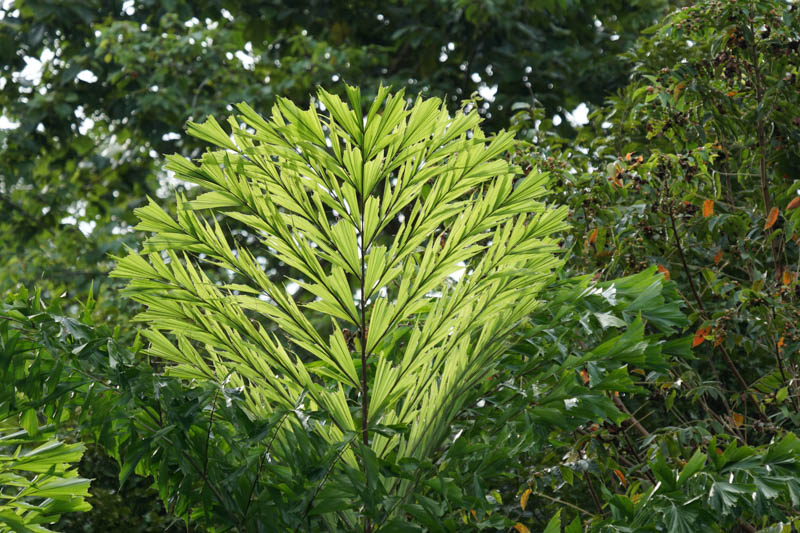
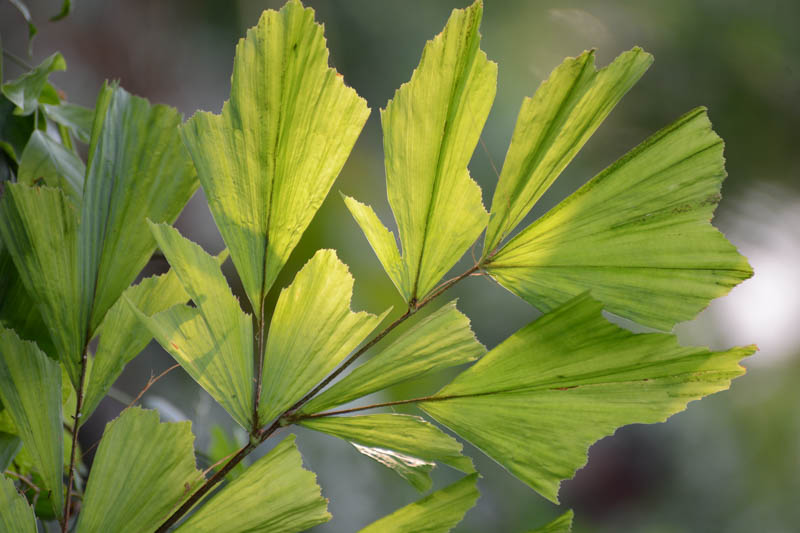


The Fishtail Palm (Caryota mitis) isn’t your average palm—it’s a showstopper with leaves that look as if someone snipped them into zig-zag fishtail shapes. Native to Southeast Asia, this clustering palm grows in graceful multi-stemmed clumps that bring instant jungle drama to gardens, patios, and bright indoor spaces. Unlike the smooth fronds of many palms, its jagged leaflets give it a bold, architectural flair that grabs attention. Easy-going yet exotic, the Fishtail Palm thrives in tropical and subtropical climates and has become a favorite for creating privacy screens, lush hedges, or statement houseplants.
Like its cousins—the Christmas Palm, Majesty Palm, Areca Palm, Acai Palm, and Saw Palmetto—it belongs to the palm family (Arecaceae), but it stands out for its quirky, serrated leaf design that makes it unforgettable.
| Botanical Name | Caryota mitis |
| Common Names | Fishtail Palm, Clustering Fishtail Palm, Burmese Fishtail Palm |
| Family | Arecaceae (Palm family) |
| Native Range | Southeast Asia (India to China, Indonesia, Philippines, Malaysia) |
| Plant Type | Evergreen, clustering palm |
| Size | 15–25 ft (4.5–7.5 m) outdoors; 6–10 ft (2–3 m) indoors/containers |
| Hardiness | USDA zones 9b–11 (not frost-tolerant) |
| Foliage | Large, bipinnate leaves with triangular, fishtail-shaped leaflets |
| Flowers | Pale purple flowers on pendulous spikes; each stem flowers once, then dies |
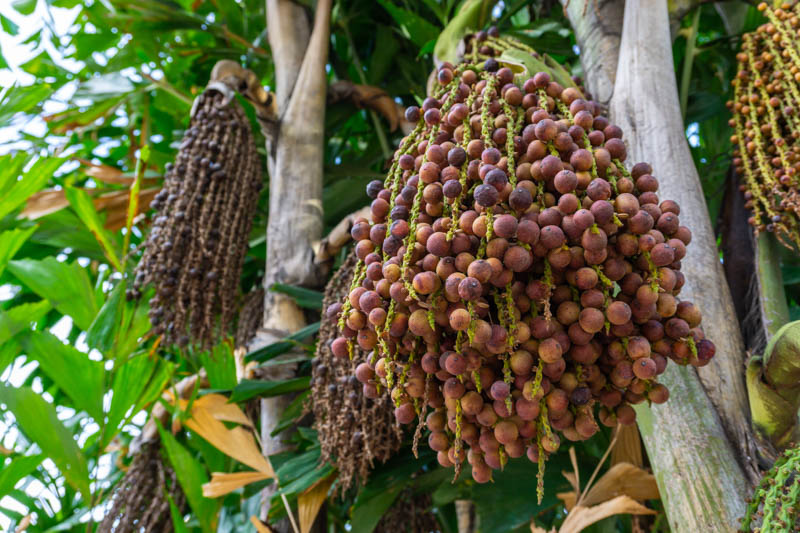
| Fruits | Reddish-black berries (toxic; cause skin and mouth irritation) |
| Uses | Ornamental landscape palm, indoor decorative plant, privacy screen, traditional uses in fiber/medicine |
| Toxicity | Toxic fruits – contain calcium oxalate crystals; harmful if ingested |
Native to Southeast Asia, Caryota mitis is found from India to southern China, through Indonesia, the Philippines, and into Malaysia. It typically grows in humid forests, limestone hills, and disturbed areas with moist organic soil. It has been widely cultivated and has naturalized in tropical regions, including southern Florida.
The Fishtail Palm is a clustering, evergreen palm with multiple stems emerging from the base. Each stem grows vertically, and the plant develops a bushy appearance with age. It is well-suited for use as a screen, hedge, or specimen palm.
In ideal outdoor conditions, the Fishtail Palm can grow 15-25 feet (4.5-7.5 meters) tall with a spread of 8-12 feet (2.5-3.5 meters). In containers or indoors, it usually reaches a smaller size of around 6-10 feet (2-3 meters).
The Fishtail Palm produces small, pale purple flowers on hanging spikes (inflorescences). The flowers emerge sequentially, starting from the top of the stem and working downward over several years. Once flowering is complete, the individual stem dies, but the clump continues to grow through new basal shoots. Houseplants rarely flower.
The fruit is a round, fleshy berry that turns from green to reddish-black when mature. These fruits contain needle-like calcium oxalate crystals, making them highly irritating to skin and toxic if ingested. Fruits are not typically ornamental and should be handled with care.
The leaves are large, bipinnate, and have distinctive fishtail-shaped leaflets. Each leaflet is triangular, widest at the top, and has irregularly serrated edges. The leaves grow 6-10 feet (2-3 meters) long, creating a lush, tropical appearance. Leaf sheaths are covered with fibrous material.
Each trunk is slender, smooth, and light gray, reaching 4-6 inches (10-15 cm) in diameter. Multiple trunks form dense clumps, creating a natural screen. As each trunk completes its flowering cycle, it dies and should be removed to encourage new growth from the base.
Fishtail Palm grows well in USDA zones 9b-11. It will tolerate a light frost, but it prefers warm, humid conditions and thrives in tropical and subtropical environments.
Fishtail Palms offer limited wildlife benefits. Their flowers attract some pollinators, but the toxic fruits are generally avoided by animals.
The fruits are toxic to humans and pets. They contain calcium oxalate crystals, which can cause severe mouth pain, skin irritation, and swelling if handled or consumed. Caution is advised when pruning flowering stems or handling fruit.
Fishtail Palm prefers moist soil and does not tolerate extended drought. Established plants can handle short dry periods, but prolonged drought will cause leaf browning and decline. Regular watering is essential in dry climates.
Fishtail Palm has naturalized in parts of southern Florida, where it can spread aggressively in disturbed areas. It forms dense clumps that crowd out native vegetation, particularly in moist forests and hammocks.
Fishtail Palms can adapt to a wide range of light conditions, from deep shade to full sun. However, in hot climates, they prefer some afternoon shade to prevent leaf scorch. Once established, they tolerate full sun better, but sheltered, filtered light often promotes healthier, greener foliage.
Grows best in rich, organic soil with good drainage. It tolerates sandy or loamy soils but benefits from regular mulching to retain moisture.
Water regularly to keep the soil evenly moist but not waterlogged. In containers, ensure pots have drainage holes. Reduce watering slightly in winter when growth slows.
Feed with a balanced palm fertilizer every 2-3 months during the growing season. Use a product containing micronutrients like magnesium and iron to prevent deficiency.
Remove dead leaves and spent flowering stems at the base. Wear gloves when pruning to avoid contact with irritating fibers and fruits.
Propagate by division or seed. To divide, separate young shoots from mature clumps and replant. Seeds germinate in 2-4 months if kept warm and moist. Fresh seeds germinate best.
Regular inspection and proper care reduce pest problems.
Fishtail palms grow at a fast rate, typically adding 1 to 2 feet (30 to 60 cm) in height per year under ideal conditions. Growth speed varies based on light, water, and soil quality.
Fishtail palms offer dense, tropical foliage, making them excellent for privacy screens, hedges, or tropical garden accents. Indoors, they help filter air. In some cultures, parts of the palm are used for traditional medicine or to extract fiber and starch from the trunk.
Fishtail palms prefer bright, indirect sunlight or dappled shade. Once established, they can tolerate full sun, but some afternoon shade is ideal in hot climates to prevent leaf scorch.
Provide bright, indirect light.
Water when the top 2-3 inches of soil are dry.
Use well-draining, nutrient-rich soil.
Maintain high humidity for indoor plants.
Fertilize during the growing season.
Avoid overwatering to prevent root rot.
Each individual stem typically lives for 10 to 15 years, flowering once before dying. However, the plant regenerates new shoots from its base, so the clump itself can live for several decades.
Common reasons for browning include:
Underwatering or overwatering.
Low humidity (especially indoors).
Too much direct sun causing leaf burn.
Nutrient deficiencies, such as potassium or magnesium.
Pests like spider mites or scale insects.
Yes, fishtail palms adapt well to large indoor spaces with bright, indirect light and high humidity. Regular misting or a humidifier helps prevent leaf browning indoors.
In ideal outdoor conditions, the Fishtail Palm can grow 15-25 feet (4.5-7.5 meters) tall with a spread of 8-12 feet (2.5-3.5 meters). In containers or indoors, it usually reaches a smaller size of around 6-10 feet (2-3 meters).
Yes, but choose a large, sturdy container with drainage holes. Repot every 2–3 years or when roots fill the pot, and feed regularly during the growing season.
Drooping fronds often signal underwatering, low humidity, or root stress. Check soil moisture and adjust watering before trimming affected leaves.
Yes—mature fishtail palms produce dramatic, branched flower clusters. Each stem flowers once, then dies back, but the clump continues producing new shoots.
Fishtail palms thrive in USDA zones 9–11. They are not frost-tolerant and must be overwintered indoors in cooler climates.
| Hardiness |
9 - 11 |
|---|---|
| Climate Zones | 23, 24, H2 |
| Plant Type | Houseplants, Palms - Cycads |
| Plant Family | Arecaceae |
| Exposure | Full Sun, Partial Sun, Shade |
| Season of Interest | Spring (Early, Mid, Late), Summer (Early, Mid, Late), Fall, Winter |
| Height | 15' - 25' (4.6m - 7.6m) |
| Spread | 8' - 12' (240cm - 3.7m) |
| Maintenance | Average |
| Water Needs | Average |
| Soil Type | Loam, Sand |
| Soil pH | Acid, Neutral, Alkaline |
| Soil Drainage | Moist but Well-Drained |
| Characteristics | Showy, Evergreen, Fruit & Berries |
| Tolerances | Humidity |
| Garden Uses | Hedges And Screens, Patio And Containers |
| Garden Styles | Mediterranean Garden |
| Toxic to Humans | Low severity |
| Toxic to Cats | No known toxicity |
| Toxic to Dogs | No known toxicity |
| Toxic to Horses | No known toxicity |


| Hardiness |
9 - 11 |
|---|---|
| Climate Zones | 23, 24, H2 |
| Plant Type | Houseplants, Palms - Cycads |
| Plant Family | Arecaceae |
| Exposure | Full Sun, Partial Sun, Shade |
| Season of Interest | Spring (Early, Mid, Late), Summer (Early, Mid, Late), Fall, Winter |
| Height | 15' - 25' (4.6m - 7.6m) |
| Spread | 8' - 12' (240cm - 3.7m) |
| Maintenance | Average |
| Water Needs | Average |
| Soil Type | Loam, Sand |
| Soil pH | Acid, Neutral, Alkaline |
| Soil Drainage | Moist but Well-Drained |
| Characteristics | Showy, Evergreen, Fruit & Berries |
| Tolerances | Humidity |
| Garden Uses | Hedges And Screens, Patio And Containers |
| Garden Styles | Mediterranean Garden |
| Toxic to Humans | Low severity |
| Toxic to Cats | No known toxicity |
| Toxic to Dogs | No known toxicity |
| Toxic to Horses | No known toxicity |
How many Caryota mitis (Fishtail Palm) do I need for my garden?
| Plant | Quantity | |
|---|---|---|
| Caryota mitis (Fishtail Palm) | N/A | Buy Plants |
Create a membership account to save your garden designs and to view them on any device.
Becoming a contributing member of Gardenia is easy and can be done in just a few minutes. If you provide us with your name, email address and the payment of a modest $25 annual membership fee, you will become a full member, enabling you to design and save up to 25 of your garden design ideas.
Join now and start creating your dream garden!
Create a membership account to save your garden designs and to view them on any device.
Becoming a contributing member of Gardenia is easy and can be done in just a few minutes. If you provide us with your name, email address and the payment of a modest $25 annual membership fee, you will become a full member, enabling you to design and save up to 25 of your garden design ideas.
Join now and start creating your dream garden!