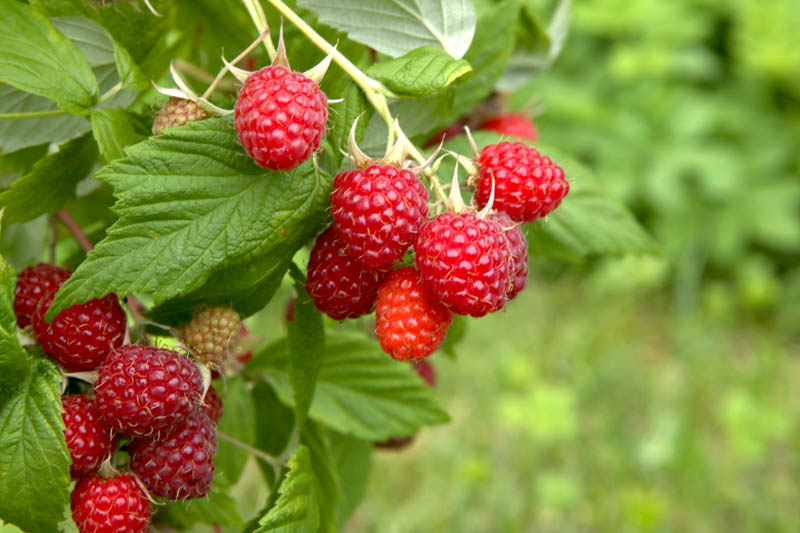
Raspberry
Raspberries aren’t just pretty faces on cheesecake—they’re botanical oddballs, pollinator magnets, and backyard superstars. Here’s a basket of bite-size facts you can drop into any conversation (or jam pot):
Not a “true” berry. Each raspberry is an aggregate fruit made of many tiny drupelets. That bumpy texture? Built-in portion control for flavor.
Hollow vs. solid—nature’s ID trick. Raspberries slip off the plant hollow; blackberries keep the white core attached. Try it and you’ll never mix them up again.
Two-year rhythm. Plants live for years, but canes live two: year-one canes (primocanes) grow; year-two canes (floricanes) fruit, then retire. Many reds offer primocane-fruiting types, too—double the fun in one season. See red raspberries and the basic species profile for Rubus idaeus.
Colors beyond red. Meet purple, gold, and black raspberries. North America’s native blackcap, Rubus occidentalis, brings inky color and a winey, perfumed sweetness. Cultivars like ‘Jewel’ shine for size and yield.
Tip-layering magic. Black raspberries love to root wherever cane tips touch soil. Gardeners harness this to make free plants—just lift and transplant the rooted tips.
Pollinator party. Those simple white flowers are bee nirvana. More bees = fuller drupelets and bigger berries. Meet your garden MVPs here: bees and bumble bees.
Kitchen chameleons. Fresh bowls, 10-minute skillet compote, jewel-toned jam, syrup for pancakes, or tray-frozen berries for smoothies in January—raspberries say “yes.”
Easy on calories, big on fiber. A cup of raspberries is famously high in fiber yet refreshingly light—tasty nutrition with crunch-free credibility.
Airflow is everything. Sun + well-drained soil + a little pruning = less disease and sweeter fruit. Keep canes thinned, water at the base (not overhead), and you’ll dodge common issues like anthracnose and verticillium wilt.
Neighborhood etiquette. Black raspberries are more virus-sensitive than reds—plant them in separate beds and remove nearby wild brambles for healthier patches (see R. occidentalis care notes).
Bottom line: pick a sunny spot, give them room to breathe, and raspberries will pay you back in bowls of bright, fragrant happiness—all summer long.