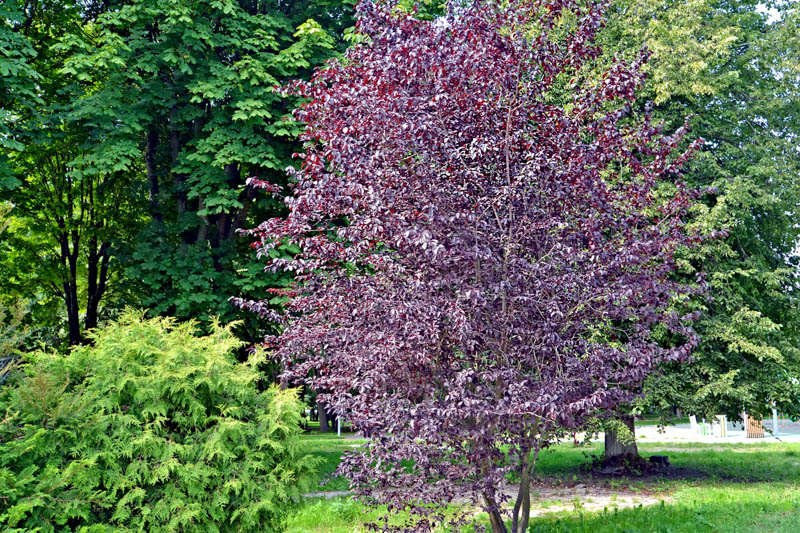
Cherry Plum
Cherry plum (Prunus cerasifera) is the cheerful overachiever of the orchard world: early to flower, generous with fruit, and gorgeous in leaf. In late winter to early spring, it bursts into clouds of white-to-blush blossoms, then follows with sweet-tart plums you can snack on, jam, or bake. Many forms flaunt purple foliage (think ‘Nigra’ or ‘Thundercloud’), turning a plain fence into a dramatic backdrop.
Fun fact #1: It’s one of the first trees to feed pollinators each year. Bees love those early flowers – so plant it where you’ll see the buzz.
Fun fact #2: Cherry plum is often used as a rootstock for plums, which is gardener-speak for “this tree quietly supports others.”
Fun fact #3: It’s happy in Mediterranean sun with decent drainage; once established, it’s fairly drought-smart and low-fuss.
Edible? Absolutely. Fruits range from ruby to gold and ripen early, making them perfect for quick preserves or bright, fresh desserts. Pro tip: birds will notice when you do – net a branch or harvest promptly.
Wondering about “cherries” vs. cherry plums? Cherries (dessert or pie types) are close cousins and great comparison shopping for bakers and snackers. If you adore pies, explore tart or sour cultivars. Prefer crisp, sweet snacks? Compare flavors, seasons, and pollination with sweet cherry varieties. For a quick overview of types (blossom showpieces to pie heroes), skim the cherry types guide, then boost success with the best companion plants.
Nutrition note: Stone fruits bring vitamin C, potassium, fiber, and polyphenols. See the highlights of cherry nutrition benefits. Curious cousins include the wildlife-friendly black cherry and the storied maraschino cherries. Pet parent tip: keep pits, leaves, and stems away from animals – read guides for cats and for dogs. With sun, drainage, and a little spring pruning, cherry plum turns the season into a blossom parade – and summer into a bowl of shiny, snackable jewels.