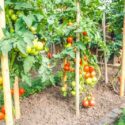
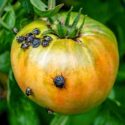
Which plants really belong beside tomatoes? Go beyond companion-planting folklore with pairings based on evidence, space, timing, water, beneficial insects, and disease risk. Discover where basil, marigolds, alyssum, lettuce, carrots, alliums, and flowers genuinely help - and why several traditional "bad companions" are not actually forbidden neighbors.


Tomatoes have inspired more companion-planting advice than almost any other vegetable. Plant basil for sweeter tomatoes. Add marigolds to repel every pest. Never let dill mature. Keep cabbage far away. Plant petunias for hornworms. Grow carrots beneath tomatoes because the two plants somehow make each other thrive.
Some of these ideas have a useful basis. Some are exaggerated. Others have been repeated for decades without strong evidence.
The best tomato companion planting is not about finding a magical plant that protects tomatoes from everything. It is about creating a garden in which neighboring plants fit the growing conditions, use space intelligently, provide food or habitat for beneficial insects, protect otherwise bare soil, provide another useful harvest, or contribute to a more diverse planting without crowding the tomato crop.
Gardenia companion-planting principle: A tomato companion should earn its place. Ask whether it improves space use, ecological function, soil cover, harvest value, or plant diversity without stealing too much light, water, airflow, or root space from the tomato.
Tomatoes are vigorous, sun-loving plants with substantial root systems and relatively high demands for water and nutrients. Indeterminate cultivars can grow for months and develop a large canopy if trained or allowed to spread.
A useful companion therefore has to fit around that architecture rather than compete with it.
Before adding another plant to a tomato bed, ask four questions:
Fit: Does it tolerate compatible light, soil, drainage, and moisture conditions?
Function: Does it provide flowers for beneficial insects, cover soil, produce another harvest, or occupy otherwise unused space?
Timing: Will it be harvested before the tomato canopy becomes dominant, or can it coexist through summer?
Risk: Will it create crowding, excessive competition, or additional pest and disease pressure?
Gardenia’s Fit-Function-Timing-Risk Test: Judge the whole planting system, not whether a traditional companion chart labels two plants “friends” or “enemies.”

Basil (Ocimum basilicum) deserves its reputation as a useful tomato companion, but not because it has been proven to make tomatoes taste sweeter.
Basil works well because:
It enjoys warm weather and full sun.
It grows well in fertile, well-drained soil with regular moisture.
Compact plants fit easily beside trained tomatoes.
Flowering basil provides nectar for bees and other insects.
Its aromatic foliage releases volatile compounds that can affect how some insects locate host plants.
It provides a valuable culinary harvest throughout tomato season.
There is also some tomato-specific evidence behind this pairing. Research has found lower thrips populations in tomatoes intercropped with basil in some field and greenhouse systems.
That is a much better reason to plant basil beside tomatoes than promising an improvement in tomato flavor.
Do not bury basil underneath a huge tomato canopy, however. It still needs enough sunlight to remain productive.
What Gardenia would not claim: There is no strong evidence that planting basil beside tomatoes makes the fruit taste better. Its real advantages are compatibility, culinary value, flowers, aromatic diversity, and potentially useful effects on certain insects.
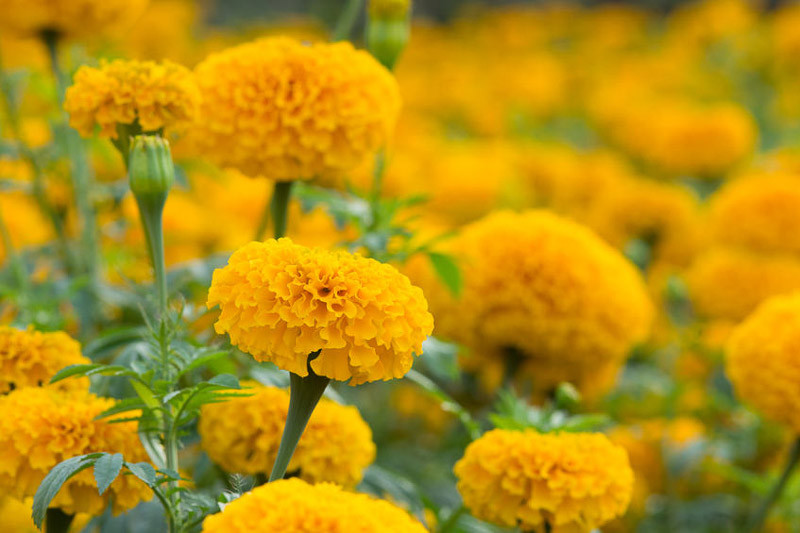
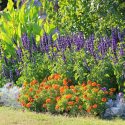
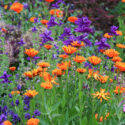
French marigolds (Tagetes patula) are among the easiest flowering plants to integrate into a tomato bed.
They work well because they are compact, long-flowering, sun-loving, and useful sources of nectar and pollen for insects.
Marigolds also have a more interesting evidence base than many traditional companions. French and African marigolds can suppress certain plant-parasitic nematodes, and some studies have reported reduced thrips populations where marigolds were intercropped with tomatoes.
But these effects are not universal. Nematode suppression depends on the marigold species or cultivar, the nematode involved, planting density, and how the marigold crop is managed.
One marigold beside one tomato should never be treated as a cure for root-knot nematodes or as a substitute for pest management.
Better expectation: Grow marigolds for flowers, biodiversity, and specific documented pest-management effects where they apply – not because they form an invisible protective barrier around tomatoes.
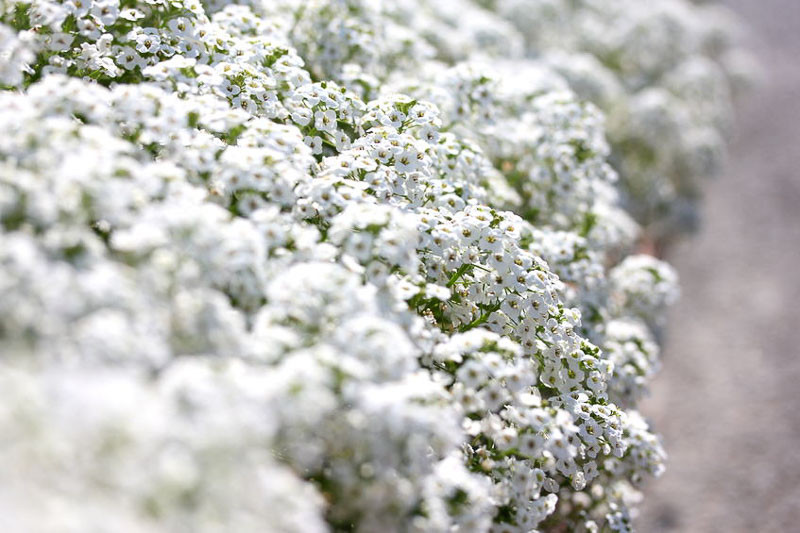
Sweet alyssum (Lobularia maritima) is one of the easiest low-growing flowers to place around a vegetable bed.
Its tiny flowers provide accessible nectar and pollen for hoverflies, parasitoid wasps, and other beneficial insects. Research in vegetable systems has shown that flowering companions such as sweet alyssum can increase populations of natural enemies of pests.
Its strongest roles are:
Providing floral resources for beneficial insects.
Creating low-growing cover along bed edges.
Increasing plant diversity without occupying tomato canopy space.
Adding fragrance and ornamental value.
This does not mean sweet alyssum has been proven to eliminate aphids, caterpillars, or whiteflies from tomato plants.
Think “feed the beneficials,” not “repel every pest.” Insectary plants strengthen the ecological diversity around a crop. They do not replace monitoring or pest control.
Members of the carrot family can be especially useful around vegetable gardens because their clusters of small flowers are accessible to many small beneficial insects.
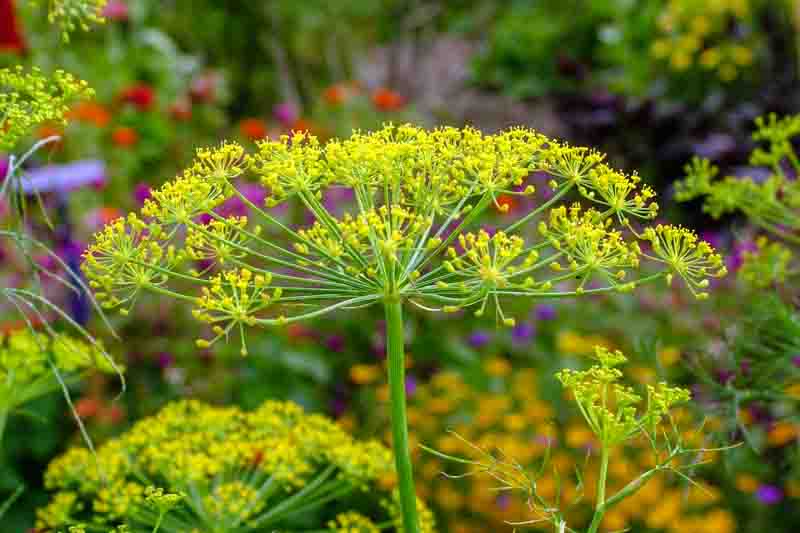
Dill (Anethum graveolens) is one of the most useful companions missing from many modern tomato lists.
When allowed to flower, its flat umbels provide nectar and pollen for parasitoid wasps, hoverflies, lacewings, lady beetles, and other insects associated with natural pest regulation.
Dill’s aromatic foliage also releases volatile compounds that may make host plants more difficult for some pests to locate.
One old companion-planting claim says that young dill benefits tomatoes but mature dill becomes harmful. There is little reason to treat dill as suddenly incompatible when it begins flowering.
Dill myth: Gardenia would not repeat the rule that dill becomes a “bad companion” as soon as it matures. Flowering dill may actually become more useful to beneficial insects.

Cilantro or coriander (Coriandrum sativum) is another cool-season herb worth allowing to bolt occasionally.
Its white flower umbels provide resources for beneficial insects. Cilantro also occupies the garden earlier in the season than peak tomato growth, making it a useful temporal companion.

Parsley (Petroselinum crispum) appreciates fertile, moist but well-drained soil and fits relatively easily into a tomato bed. Second-year parsley allowed to flower produces umbels with similar insectary value.
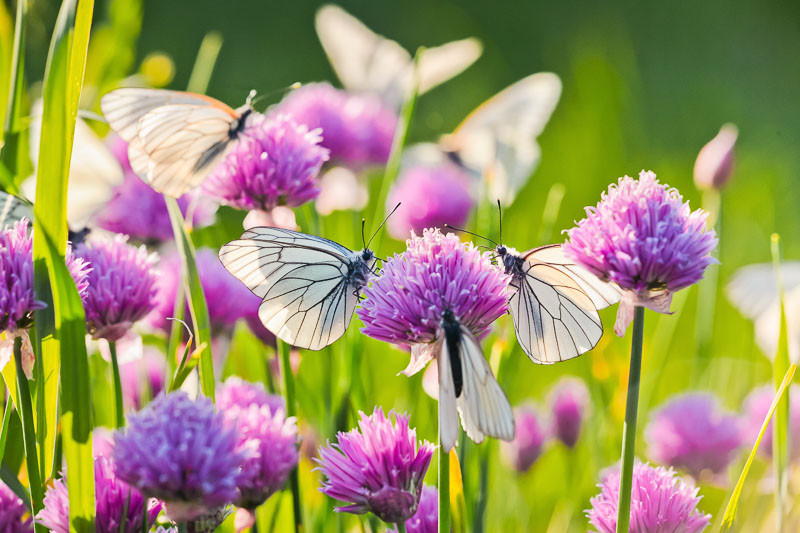
Garlic (Allium sativum), onions, and chives are practical tomato companions because they occupy relatively little canopy space.
Aromatic alliums are also relevant because volatile compounds released by these plants can interfere with host-finding by some insects.
Garlic is particularly convenient because:
It is planted long before tomatoes fill the bed.
Its narrow foliage creates little shade.
The crop is often harvested by early or midsummer.
It enjoys full sun and good drainage.
Do not translate this into a claim that living garlic plants prevent tomato diseases. Garlic extracts, experimental treatments, sprays, and living companion plants are not interchangeable.
Some of the best tomato companions are not plants that protect tomatoes at all. They simply use garden space efficiently before the tomato crop reaches full size.

Lettuce (Lactuca sativa) is an excellent early-season space-sharing crop.
Young tomato plants leave substantial open ground around them. Lettuce can occupy that area during cool weather and be harvested as the tomato canopy expands.

Radishes (Raphanus sativus) may mature in only a few weeks, making them exceptionally useful as catch crops around young tomatoes.
Their value is primarily timing. They are often harvested long before tomato roots and foliage fully occupy the space.
Gardenia would not rely on the frequently repeated claim that radishes planted beside tomatoes reliably repel spider mites.
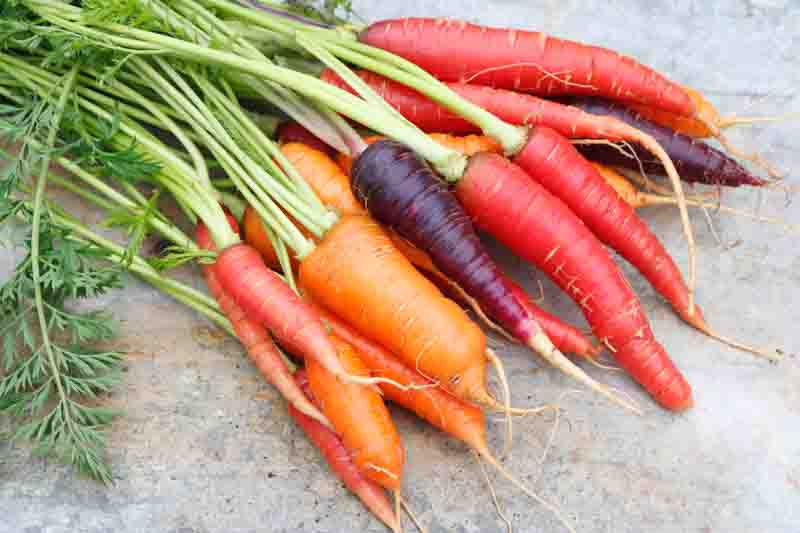
Carrots (Daucus carota subsp. sativus) use relatively little vertical space and can also be sown while tomatoes are still small.
But tomatoes do not magically make carrots grow better. A mature tomato canopy can eventually shade carrots heavily, and both crops still compete for water and soil resources.
Companion planting can be about time as well as space. Lettuce, radishes, and carrots work well because much of their crop can be harvested before tomatoes need the entire bed.
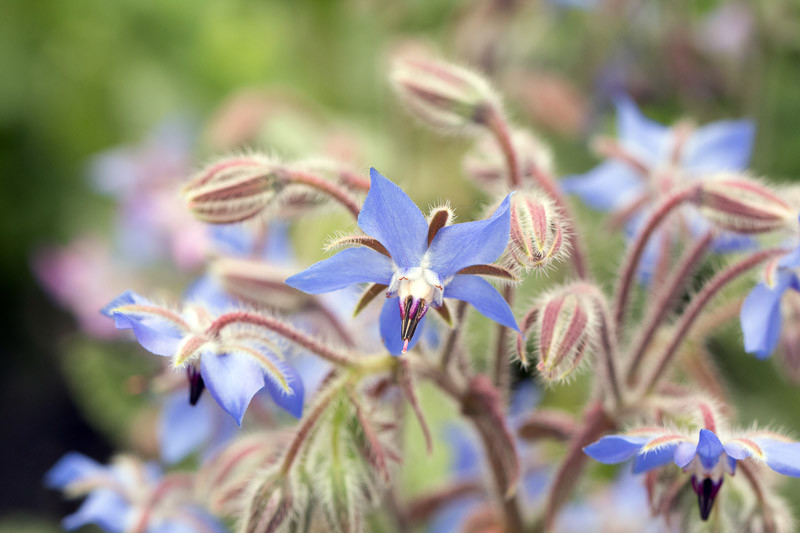
Borage (Borago officinalis) produces abundant blue star-shaped flowers that attract bees and other visiting insects.
Tomatoes are self-fertile, so borage is not required for pollination. Its strongest role is increasing flowering diversity around the vegetable garden.
Claims that borage prevents tomato hornworms, improves tomato flavor, or makes tomatoes more disease-resistant are much harder to substantiate.
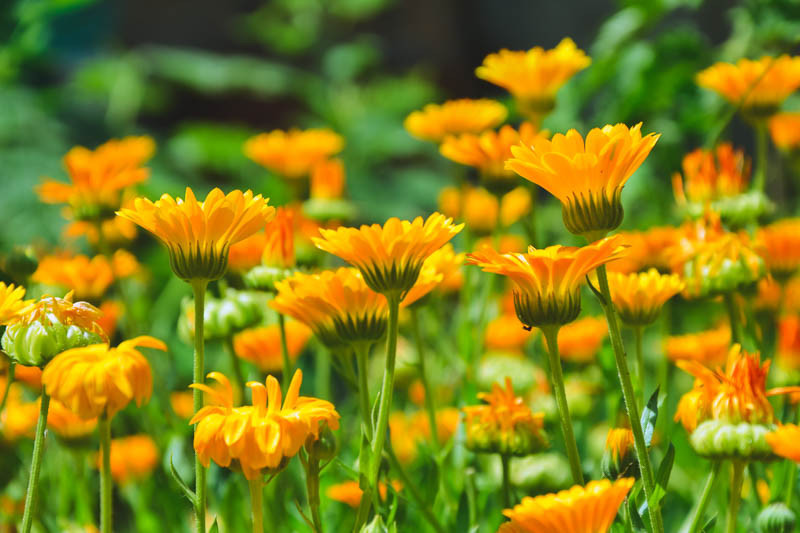
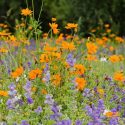
Calendula (Calendula officinalis) adds long-lasting flowers, edible petals, and additional insect resources.
It prefers cooler conditions than peak-summer tomatoes and may decline in intense heat, so its strongest overlap with tomatoes may occur earlier or later in the season.
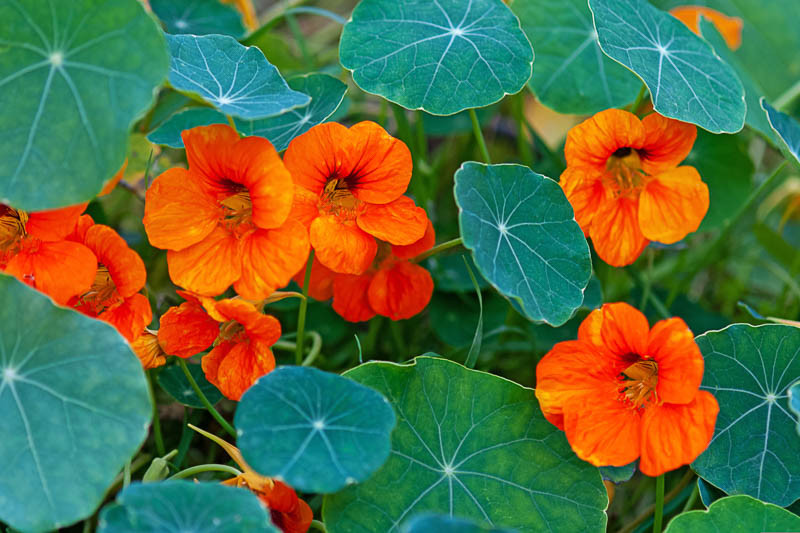
Nasturtium (Tropaeolum majus) provides edible flowers and leaves, floral resources, and trailing growth around bed edges.
Nasturtiums are often described as aphid trap crops. They can attract aphids, but that does not prove that nearby tomatoes will remain aphid-free.
Also check local guidance before allowing nasturtiums to spread freely. Tropaeolum majus can naturalize aggressively in some mild climates.
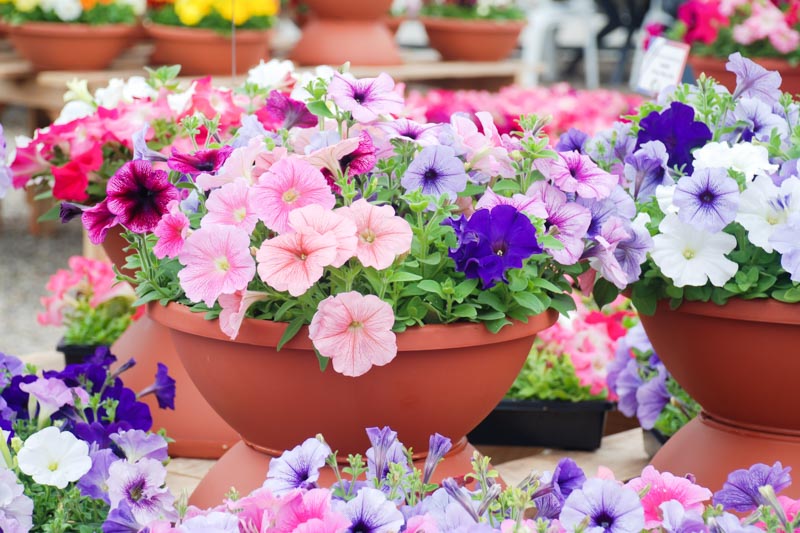
Petunias can provide long-season color around the sunny margins of tomato beds and share broadly compatible light and moisture requirements.
They are frequently promoted online as repellents for aphids, tomato hornworms, leafhoppers, and other pests. Those claims are much stronger than the evidence justifies.
Use petunias primarily as ornamental flowering companions, not as guaranteed tomato pest control.
Flowers do not all do the same job. Some have specific evidence behind particular pest interactions. Others mainly provide floral diversity, habitat, edible flowers, or ornamental value. Gardenia keeps those roles separate.
Not every valuable companion belongs directly between tomato plants. Some are more useful as nearby habitat plants.
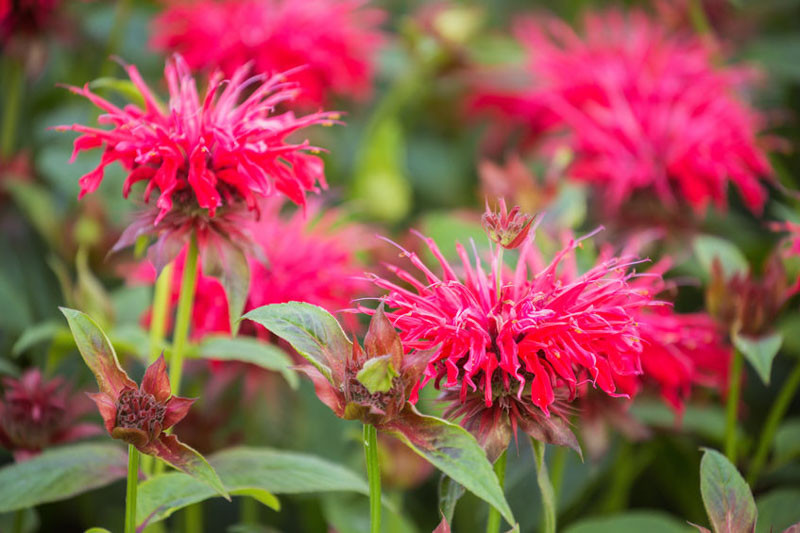
Bee balm (Monarda) produces abundant summer flowers visited by bees, butterflies, and hummingbirds.
Its value near a vegetable garden comes from flowering diversity and pollinator habitat, not from a proven ability to repel specific tomato pests.
Bee balm is also a vigorous perennial that may spread by rhizomes and form substantial colonies. Plant it in a nearby border rather than directly beneath tomatoes, where it could compete for root space and airflow.
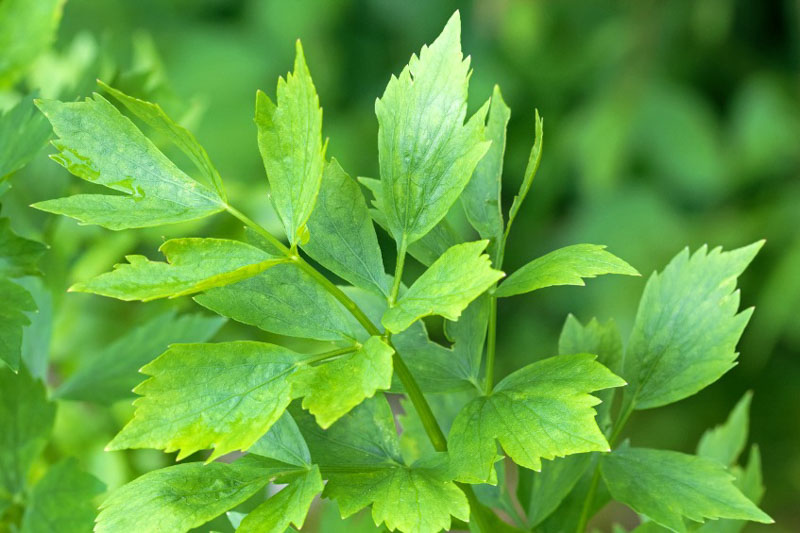
Lovage (Levisticum officinale) is a large perennial member of the carrot family that can reach 3-6 feet tall.
Its greenish-yellow umbels attract insects, making it potentially useful as part of a perennial insectary border.
But its size is the important limitation. Lovage can reach 2-3 feet across, so it belongs near the vegetable garden rather than squeezed between tomato plants.
Nearby counts. A plant does not have to share the tomato root zone to contribute flowers, habitat, and biodiversity to the vegetable garden.
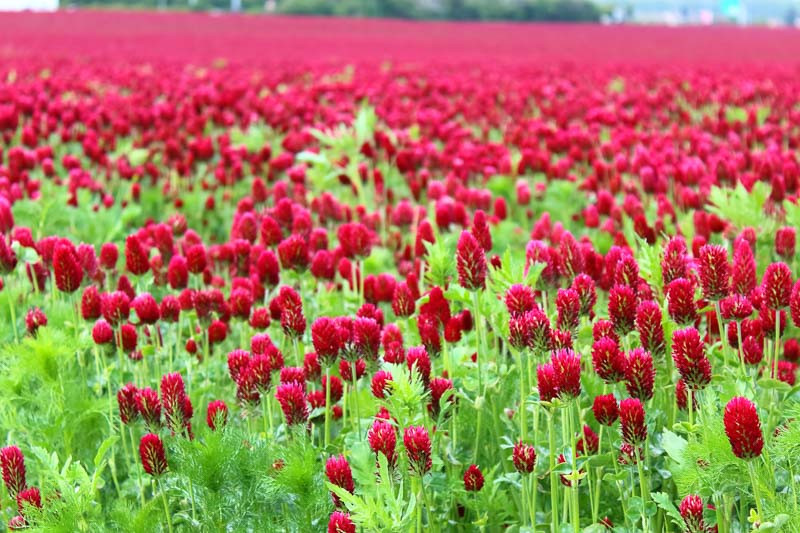
Crimson clover (Trifolium incarnatum) deserves a place in a comprehensive tomato companion guide, but its role is very different from basil or marigolds.
Crimson clover is a nitrogen-fixing legume often used as a cover crop. It can:
Cover otherwise bare soil.
Protect soil from erosion.
Provide flowers for bees.
Produce biomass and organic matter.
Contribute nitrogen to future crops when its biomass is properly managed and returned to the soil.
However, the common claim that living clover simply “feeds nitrogen” directly to neighboring tomatoes is misleading. Much of the nitrogen becomes available after plant tissues and roots decompose rather than flowing automatically into the tomato while both crops are growing.
A vigorous living clover stand can also compete with tomatoes for moisture, light, and nutrients.
Crimson clover is therefore often more useful:
As a cover crop before tomatoes are planted.
Between widely spaced rows where competition can be controlled.
As a managed living mulch that is mowed or suppressed before it competes heavily.
Gardenia clover rule: Nitrogen fixation does not mean a living clover plant is continuously fertilizing the tomato beside it. Think of crimson clover primarily as a cover-crop and soil-management tool.
Crimson clover can also serve as a secondary host for pests in the Helicoverpa complex, including tomato fruitworm, so this should be considered where the pest is common.

Celery (Apium graveolens var. dulce) appeared on many traditional tomato companion lists, and it can certainly coexist with tomatoes.
Both appreciate fertile soil and regular moisture, but celery is a cool-weather crop that can struggle during the hottest part of tomato season.
Its value is therefore mostly practical:
It can share rich, consistently moist garden soil.
It provides another edible harvest.
It can occupy nearby space without creating a dense spreading canopy.
There is no compelling evidence that celery provides a special protective effect to tomatoes, so Gardenia would classify it as a compatible edible neighbor, not one of the most important tomato companion plants.
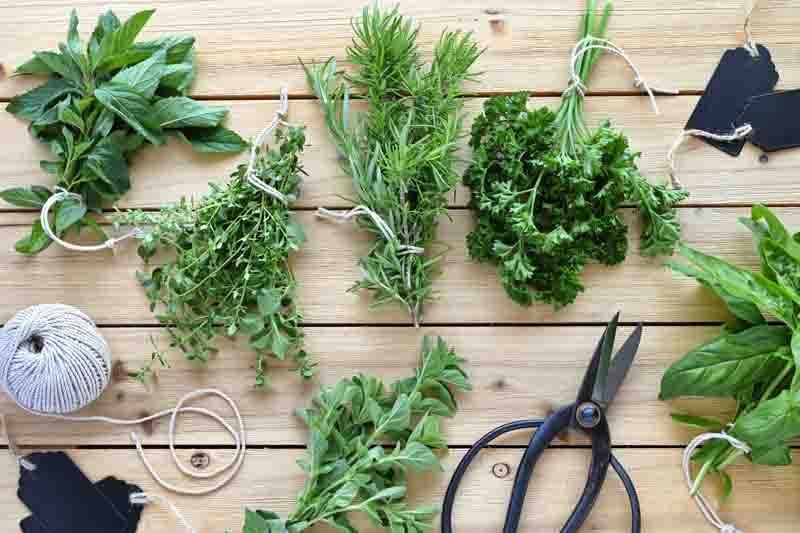
Oregano (Origanum vulgare) and thyme (Thymus vulgaris) can both contribute aromatic foliage and flowers around a tomato bed.
The challenge is moisture.
Established Mediterranean herbs generally tolerate drier soil than heavily producing tomatoes. They therefore fit best:
Along raised-bed edges.
On slightly higher or better-drained ground.
In adjacent containers.
Where tomato irrigation does not keep their crowns continuously wet.
Same sunlight does not mean identical needs. Water compatibility matters too. A Mediterranean herb can be useful near tomatoes without needing exactly the same irrigation treatment.
| Plant | Best Role | Main Limitation |
|---|---|---|
| Basil | Culinary crop, aromatic diversity, some thrips evidence | Can become shaded |
| French marigold | Flowers, specific nematode effects, some thrips evidence | Not universal pest protection |
| Sweet alyssum | Low-growing insectary plant | May decline in intense heat |
| Dill / cilantro / parsley | Umbel flowers for beneficial insects | Need some plants left to flower |
| Garlic / onions / chives | Compact aromatic neighbors | Do not overstate pest control |
| Lettuce / radishes / carrots | Early-season space sharing | Eventually shaded or crowded |
| Borage | Flowering diversity | Large, sprawling growth |
| Calendula | Flowers, edible petals | May decline in heat |
| Nasturtium | Edible flowers, trailing cover | Aphids, spreading habit |
| Petunia | Long-season ornamental flowers | Pest-repelling claims weak |
| Bee balm | Nearby pollinator habitat | Large, spreading perennial |
| Lovage | Large perennial insectary plant | Too large for close planting |
| Crimson clover | Cover crop, soil protection, biomass | Can compete as living mulch |
| Celery | Compatible edible neighbor | No special tomato-specific benefit |
| Oregano / thyme | Aromatic flowers at bed margins | Prefer drier conditions |
The phrase “bad companion” is often misleading. Most plants do not poison one another simply because they share a garden bed.
A more useful question is: Which neighboring plants create unnecessary competition, shading, pest pressure, disease risk, or crop-rotation problems?

Potatoes and tomatoes belong to the same family and share important diseases, including early blight and late blight.
Growing them nearby does not create disease by itself, but it concentrates susceptible hosts in one area.
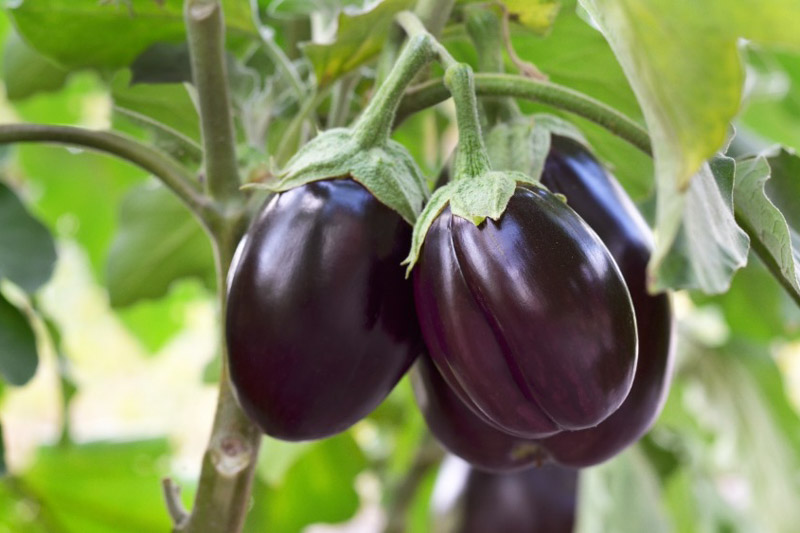
Peppers and eggplants are not inherently incompatible with tomatoes. They simply share many of the same pests and diseases.
Tomatoes, potatoes, peppers, and eggplants should therefore be treated as one rotation group when managing many soilborne problems.

Corn can shade tomatoes, compete heavily for water and nutrients, and shares an important pest connection: corn earworm and tomato fruitworm are the same insect, Helicoverpa zea.

Black walnut is different from most plants on companion-planting avoid lists.
Black walnut produces juglone, and tomatoes are particularly sensitive. Avoid planting tomatoes within an active black walnut root zone or where substantial walnut residues influence the soil.
True incompatibility is uncommon. Black walnut is a meaningful physiological concern. Most other “bad companions” are better understood as problems of competition, shared pests, shared diseases, timing, or crowding.

Yes. There is no compelling evidence that broccoli, cabbage, cauliflower, kale, or other brassicas chemically “repel” tomatoes or prevent their roots from growing.
The real issues are practical. Large brassicas can occupy substantial root and canopy space, compete for water and fertility, reduce access, and contribute to crowding.
Early brassicas can coexist near young tomatoes when there is enough room and their seasons overlap sensibly.
Companion-planting myth: Tomatoes and brassicas do not need to be separated because they supposedly dislike one another. Think about space, fertility, timing, and airflow instead.
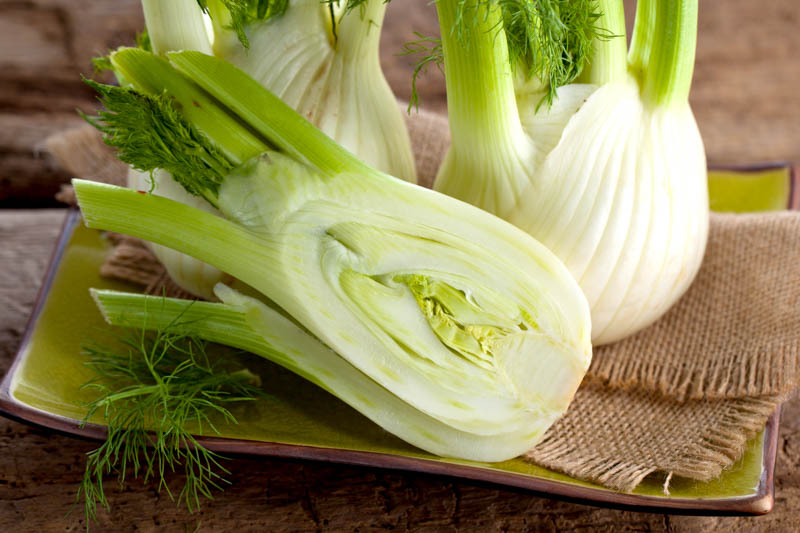
Fennel is routinely described as a universally bad companion because of alleged allelopathic effects.
Fennel does contain biologically active compounds, but evidence from actual home-garden plantings is much less clear than universal companion charts suggest. Laboratory allelopathy findings should not automatically be translated into the claim that one fennel plant will poison a tomato growing nearby.
There are still practical reasons to give mature fennel its own space. It becomes tall and broad, occupies significant root room, and can shade or crowd neighboring vegetables.
Grow it separately because of its architecture and competitive potential, not because it has been proven to be universally toxic to tomatoes.
Companion planting can make a vegetable garden more diverse, efficient, attractive, and ecologically interesting. It is not a substitute for basic tomato care.
A companion plant cannot reliably:
Prevent late blight. Basil and marigolds do not make tomatoes immune to infectious disease.
Cure early blight, Septoria, bacterial disease, or viruses.
Eliminate tomato hornworms.
Guarantee freedom from aphids or whiteflies.
Correct irregular watering or poor drainage.
Replace adequate tomato spacing.
Replace crop rotation.
Make a susceptible cultivar genetically disease-resistant.
Use companion planting as one layer of garden design – not as a cure-all. Healthy tomatoes still depend on suitable varieties, sunlight, soil, water, support, spacing, sanitation, pest monitoring, and disease prevention.
If something is already going wrong with your crop, use Gardenia’s Tomato Problems: What Is Wrong With My Plant? guide. For infectious problems, see Tomato Diseases: Identification, Treatment & Prevention.
A theoretically excellent companion becomes a bad neighbor when it crowds the tomato plant.
Tomatoes still need:
Enough direct sunlight.
Room for their mature canopy.
Good airflow around foliage.
Access for tying, pruning, harvesting, and inspection.
A root zone that does not dry out immediately because of excessive competition.
As a broad starting point, many full-sized tomatoes are spaced roughly 24-36 inches apart, although cultivar, support system, pruning, climate, and growing method can justify different spacing.
Do not fill every patch of open soil merely because another plant appears on a companion list.
Gardenia crowding rule: The tomato remains the main crop. If a companion blocks light, reduces airflow, competes heavily for water, interferes with access, or makes disease management harder, it has stopped being a useful companion.
For planting, watering, support, feeding, and disease-prevention guidance, see Gardenia’s How to Grow Tomatoes: Complete Planting & Care Guide.
A productive tomato bed does not need every plant ever described as a tomato companion.
A more useful design gives different plants different jobs:
Main crop: tomatoes with appropriate spacing and support.
Culinary and aromatic companion: basil.
Low insectary edge: sweet alyssum.
Beneficial-insect flowers: dill, cilantro, parsley, marigolds, or calendula.
Early-season space users: lettuce, radishes, and carrots.
Compact allium crop: garlic, onions, or chives.
Nearby flowering habitat: bee balm, borage, or lovage.
Soil-management crop: crimson clover when appropriately managed.
Dryer bed edge: thyme or oregano.
Ornamental color: petunias or nasturtiums where they will not crowd the crop.
This creates multiple practical and ecological functions without turning the tomato bed into an overcrowded botanical experiment.
Gardenia’s companion strategy: Choose companions by job, not reputation. A diverse tomato planting might contain one culinary herb, one insectary flower, one early-season crop, and one border plant – not 20 species competing around a single tomato.
For broader tomato information, visit Gardenia’s Tomato (Solanum lycopersicum) profile.
Useful tomato companions include basil, French marigolds, sweet alyssum, dill, cilantro, parsley, garlic, onions, chives, lettuce, radishes, carrots, borage, calendula, nasturtiums, bee balm, lovage, crimson clover, oregano, and thyme. The best choice depends on the function you need and the space available.
There is not strong evidence that basil planted beside tomatoes changes tomato flavor. Basil remains useful because it shares compatible growing conditions, provides a culinary crop and flowers, and has shown some ability to reduce thrips in tomato intercropping studies.
Marigolds can contribute to pest management in specific situations. Certain marigolds can affect plant-parasitic nematodes, and some studies have reported lower thrips populations in tomatoes. They do not provide universal protection from tomato pests.
Yes. Flowering dill provides nectar and pollen for beneficial insects and its aromatic foliage may affect host-finding by some pests. There is little reason to repeat the traditional claim that dill suddenly becomes harmful to tomatoes when it matures.
Yes, mainly because they mature quickly. Radishes can use open soil around young tomato plants and be harvested before tomatoes need the full bed. Their value as a tomato companion is primarily efficient seasonal space use rather than proven pest repellency.
Crimson clover can be valuable as a cover crop, soil cover, and source of organic matter. However, living clover does not simply feed nitrogen directly to neighboring tomatoes and can compete with the crop if allowed to grow too vigorously.
Yes, especially in a nearby border. Bee balm provides abundant flowers for pollinators, but it is a vigorous spreading perennial and can become too competitive if planted directly in the tomato root zone.
Petunias are often promoted as natural hornworm or aphid repellents, but strong evidence for these tomato-specific claims is limited. Use petunias primarily for long-season flowers and ornamental diversity rather than guaranteed pest control.
Yes. Garlic is compact, creates little shade, and fits well into a tomato bed. Volatile compounds from alliums may affect how some insects locate host plants, but garlic should not be treated as guaranteed pest or disease control.
Yes. These crops are particularly useful early in the season because they occupy space before tomatoes reach full size. Radishes and lettuce can often be harvested before severe competition develops, while carrots need enough light and root room as tomato plants mature.
The pairing is generally not ideal because tomatoes and potatoes share several important diseases. Tomatoes, potatoes, peppers, and eggplants also belong to the same family and should be treated as one crop-rotation group for many disease problems.
Yes. There is no strong evidence that brassicas and tomatoes are chemically incompatible. Large brassicas can compete for water, fertility, light, and space, so timing and adequate spacing matter more than traditional companion charts.
Fennel is frequently described as allelopathic to vegetables, but evidence from actual garden plantings is less clear than companion charts suggest. Mature fennel is large and competitive, so giving it separate space is sensible primarily for practical reasons.
There is no universal companion distance. Preserve airflow and access around tomato plants and avoid crowding the main root zone. Large or spreading companions such as bee balm, lovage, borage, and fennel belong near the bed rather than directly against tomato stems.
No companion plant provides complete protection. Flowering plants, aromatic herbs, cover crops, and interplanting can contribute to a diversified garden system, but they do not replace spacing, watering, sanitation, rotation, resistant cultivars, pest monitoring, or disease diagnosis.
Updated: September 2026 • Reviewed by Gardenia Editors
| Hardiness |
2 - 11 |
|---|---|
| Climate Zones | 1, 1A, 1B, 2, 2A, 2B, 3, 3A, 3B, 4, 5, 6, 7, 8, 9, 10, 11, 12, 13, 14, 15, 16, 17, 18, 19, 20, 21, 22, 23, 24, A1, A2, A3, H1, H2 |
| Plant Type | Annuals, Fruits, Perennials |
| Plant Family | Solanaceae |
| Genus | Solanum, Tomatoes |
| Exposure | Full Sun |
| Season of Interest | Spring (Late), Summer (Early, Mid, Late), Fall |
| Maintenance | Average, High |
| Water Needs | Average |
| Soil Type | Clay, Loam, Sand |
| Soil pH | Acid, Neutral |
| Soil Drainage | Moist but Well-Drained |
123rf
| Hardiness |
2 - 11 |
|---|---|
| Climate Zones | 1, 1A, 1B, 2, 2A, 2B, 3, 3A, 3B, 4, 5, 6, 7, 8, 9, 10, 11, 12, 13, 14, 15, 16, 17, 18, 19, 20, 21, 22, 23, 24, A1, A2, A3, H1, H2 |
| Plant Type | Annuals, Fruits, Perennials |
| Plant Family | Solanaceae |
| Genus | Solanum, Tomatoes |
| Exposure | Full Sun |
| Season of Interest | Spring (Late), Summer (Early, Mid, Late), Fall |
| Maintenance | Average, High |
| Water Needs | Average |
| Soil Type | Clay, Loam, Sand |
| Soil pH | Acid, Neutral |
| Soil Drainage | Moist but Well-Drained |
Create a membership account to save your garden designs and to view them on any device.
Becoming a contributing member of Gardenia is easy and can be done in just a few minutes. If you provide us with your name, email address and the payment of a modest $25 annual membership fee, you will become a full member, enabling you to design and save up to 25 of your garden design ideas.
Join now and start creating your dream garden!