Create Your Garden

Bulb Rot

How to Identify, Prevent, and Treat Brown Rot
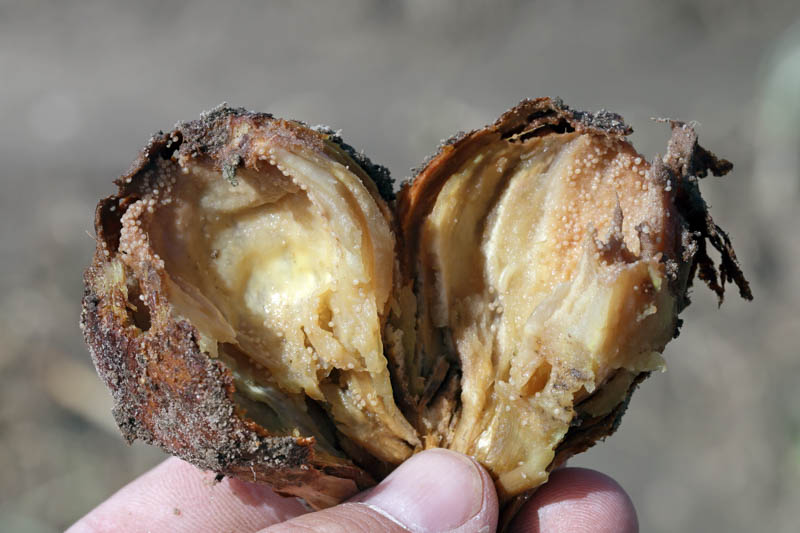
Bulb rot, Basal rot, Bulb decay, Soft rot, Root rot, Crown rot

What is Bulb Rot?

In bulb plants, the condition commonly referred to as bulb rot affects the underground storage organ itself rather than the above-ground stem.

Bulb rot is a disease process in which pathogens invade bulb tissue, causing it to soften, discolor, collapse, or dry out. Once rot begins, the bulb can no longer store energy or support growth, leading to failed emergence or sudden plant collapse shortly after sprouting.

Quick facts – Bulb rot
  • Primary tissue affected – Bulb scales and basal plate
  • When it starts – Dormancy or early growth
  • Main trigger – Excess moisture and poor drainage
  • Most common victims – Tulips, daffodils, lilies, hyacinths, gladiolus
  • Recovery possible? – No once internal rot is present

Regions Impacted

Bulb rot occurs globally and affects both ornamental and edible bulb crops. It is most prevalent in regions with:

  • Cool, wet winters or springs.
  • Heavy or compacted soils that retain moisture.
  • Poorly drained garden beds or containers.
  • High rainfall during bulb dormancy.

Even arid climates experience bulb rot when irrigation is excessive or bulbs are planted in low-oxygen soils.

Insight:“Bulb rot is driven by moisture and oxygen imbalance—pathogens take advantage only after the bulb is physiologically stressed.”

What Causes Brown Rot?

Bulb rot is caused by soil-borne fungal and bacterial pathogens that attack bulb tissue when environmental conditions favor infection. These organisms persist in soil, infected planting stock, water, and plant debris.

The most common pathogens responsible for bulb rot include fungi from the genera Fusarium, Phytophthora, Rhizoctonia, and Sclerotinia, as well as several bacterial species that cause soft rot.

In bulbs, infection typically begins at:

  • The basal plate.
  • Wounds from harvesting, transport, or planting.
  • Natural openings between bulb scales.

Conditions that dramatically increase risk include waterlogged soil, planting bulbs too deeply, warm temperatures during dormancy, and poor air circulation during storage.

What are the Different Types of Bulb Rot?

Bulb rot presents in several distinct forms depending on the pathogen involved. Each type affects bulb tissue differently and produces recognizable symptoms.

  • Fusarium Bulb Rot (Basal Rot):
    • Causal Agent: Fusarium oxysporum and related species.
    • Symptoms: Dry, brown decay beginning at the basal plate and progressing upward. Bulbs may shrink or crack.
    • Host Plants: Tulips, lilies, gladiolus.
  • Phytophthora Bulb Rot:
    • Causal Agent: Species of Phytophthora.
    • Symptoms: Soft, water-soaked bulb tissue; rapid root loss; sudden plant collapse.
    • Host Plants: Daffodils, irises, lilies.
  • Rhizoctonia Bulb Rot:
    • Causal Agent: Rhizoctonia solani.
    • Symptoms: Firm brown lesions on outer bulb scales; delayed or uneven emergence.
    • Host Plants: Crocus, lilies, ornamental bulbs.
  • Sclerotinia Bulb Rot:
    • Causal Agent: Sclerotinia sclerotiorum.
    • Symptoms: Soft rot with white fungal growth and black sclerotia inside the bulb.
    • Host Plants: Various ornamental bulbs.
  • Bacterial Soft Rot:
    • Causal Agent: Multiple bacterial species.
    • Symptoms: Slimy, foul-smelling bulbs that collapse rapidly.
    • Host Plants: Most bulb species, especially during storage.
Key diagnostic clue: Dry, firm decay points to Fusarium. Soft, wet, foul-smelling tissue usually indicates bacterial or Phytophthora rot.

What are the Symptoms?

Because bulb rot begins underground, symptoms often appear late. Typical signs include:

  • Bulbs that fail to sprout.
  • Weak or distorted shoots.
  • Yellowing leaves shortly after emergence.
  • Plants that topple easily.
  • Bulbs that are soft, hollow, or discolored.
  • Roots that are absent or decayed.
Simple bulb rot check
  1. Lift the bulb carefully.
  2. Squeeze—healthy bulbs are firm.
  3. Cut through the basal plate.
  4. Any browning, odor, or softness confirms rot.

How to Control Brown Rot?

  • Soil Management: Plant bulbs in sharply drained soil or raised beds.
  • Crop rotation: Avoid replanting bulbs in the same location year after year.
  • Sanitation: Destroy infected bulbs—never compost them.
  • Resistant Varieties: Select cultivars bred for disease tolerance when available.
  • Proper Watering: Avoid watering dormant bulbs; water actively growing plants only when soil begins to dry.
  • Biological Control: Beneficial microbes can suppress soil pathogens.
  • Chemical Control: Fungicides are preventative only and must be applied before infection.
  • Soil Solarization: Useful in warm climates before fall planting.
Non-negotiables for healthy bulbs
  • Never plant bulbs in standing water.
  • Inspect bulbs before planting—discard anything soft.
  • Store bulbs cool, dry, and ventilated.
  • When one bulb rots, nearby bulbs are at risk.

Bulb rot is one of the most common causes of bulb failure in gardens and commercial plantings. While treatment options are limited once rot begins, careful site preparation, moisture control, and clean planting stock can prevent most losses.

Frequently Asked Questions

What is bulb rot?

Bulb rot is a disease condition in which fungi or bacteria infect the bulb, causing the bulb scales or basal plate to decay. Once rot begins, the bulb can no longer store energy or support healthy growth, often leading to failed emergence or plant collapse.

What causes bulb rot?

Bulb rot is caused by soil-borne pathogens such as Fusarium, Phytophthora, Rhizoctonia, Sclerotinia, and various bacteria. These organisms infect bulbs when moisture levels are high and oxygen in the soil is limited.

Is bulb rot caused by overwatering?

Overwatering does not directly cause bulb rot, but it creates the wet, low-oxygen conditions that allow rot-causing pathogens to thrive. Poor drainage combined with frequent watering is the most common trigger.

Can a bulb recover once rot starts?

No. Once internal bulb tissue begins to rot, the bulb cannot recover. Infected bulbs should be removed and destroyed to prevent the spread of disease to nearby bulbs.

How can you tell if a bulb is rotting?

A rotting bulb is soft, mushy, hollow, discolored, or foul-smelling. Healthy bulbs are firm and dry. Cutting through the basal plate often reveals brown or black tissue in infected bulbs.

Why did my bulbs fail to sprout?

Bulbs often fail to sprout because they rotted during dormancy due to excess moisture, poor drainage, or infection by soil-borne pathogens. Rot commonly occurs before any above-ground growth is visible.

Which bulbs are most susceptible to bulb rot?

Tulips, daffodils, lilies, hyacinths, gladiolus, and irises are commonly affected, especially when planted in poorly drained soil or stored improperly before planting.

Does bulb rot spread in the soil?

Yes. Many bulb rot pathogens persist in soil and can spread through water movement, contaminated tools, or infected planting stock. One rotting bulb can increase disease pressure for nearby bulbs.

Is bulb rot the same as basal rot?

Basal rot is a specific type of bulb rot, most commonly caused by Fusarium species. It begins at the basal plate and progresses upward into the bulb scales.

How do you prevent bulb rot?

Prevent bulb rot by planting only firm, disease-free bulbs in well-drained soil, avoiding overwatering, planting at the correct depth, and never leaving bulbs sitting in waterlogged conditions.

Can fungicides cure bulb rot?

No. Fungicides cannot cure bulb rot once infection has started. They are only effective as preventive treatments and must be applied before pathogens infect the bulb.
More on Gardenia

While every effort has been made to describe these plants accurately, please keep in mind that height, bloom time, and color may differ in various climates. The description of these plants has been written based on numerous outside resources.

Related Items

Please Login to Proceed

You Have Reached The Free Limit, Please Subscribe to Proceed

Subscribe to Gardenia

To create additional collections, you must be a paid member of Gardenia
  • Add as many plants as you wish
  • Create and save up to 25 garden collections
Become a Member

Plant Added Successfully

Your garden is taking shape. Unlock full planning.

You’ve reached the free limit. Upgrade for $25/year to add as many plants as you wish and save up to 25 garden collections. Unlock Annual Membership

Update Your Credit
Card Information

Cancel

Create a New Collection

Sign Up to Our Newsletter

    You have been subscribed successfully

    Join Gardenia.net

    Create a membership account to save your garden designs and to view them on any device.

    Becoming a contributing member of Gardenia is easy and can be done in just a few minutes. If you provide us with your name, email address and the payment of a modest $25 annual membership fee, you will become a full member, enabling you to design and save up to 25 of your garden design ideas.

    Join now and start creating your dream garden!

    Join Gardenia.net

    Create a membership account to save your garden designs and to view them on any device.

    Becoming a contributing member of Gardenia is easy and can be done in just a few minutes. If you provide us with your name, email address and the payment of a modest $25 annual membership fee, you will become a full member, enabling you to design and save up to 25 of your garden design ideas.

    Join now and start creating your dream garden!
    Find your Hardiness Zone

    Find your Heat Zone

    Find your Climate Zone